It's true, I'm moved to a new blog. Time to leave this Lost infected one to the archives. The new one is prettier and wiser. You can go there now, there's even something new. You can subscribe there too, and/or "like" a Facebook page that is made especially for the blog.
The Url is the same just takes you somewhere new: ScottFurrow.com
Facebook.com/scottfurrow
twitter.com/scottfurrow
Looking forward to a the new.
SCF
Apr 27, 2015


Feb 5, 2014
Coke and the CBO - Take Your Medicine

Today, not just the news, but many "advancements" in science, education, philosophy, sociology, religion and other disciplines are no longer driven by a desire to know, but instead, are driven by advocacy (and the funding that comes with it) and political correctness. For many, it is more important to be right, or to win an election, or to receive attention (especially the kind that comes with funding) than it is to make authentic and helpful discovery.
Even worse, our culture is content to spread falsehood simply because we believe it passionately and have even acted faithfully according to those false beliefs. We are a "willfully ignorant" society, as CS Lewis would say, and too often we are so convinced of the truth, we don't think it's necessary to look at the facts. I'm amazed at how many people repost hateful and ignorant posts from anonymous and unresearched Facebook Pages, for example. More incredibly is how often someone proudly tweets out thier own shallowness and ignorance in less than 140 characters. How many people have been fired recently for their tweets? #HasJustineLandedYet
This willful ignorance is enslaving and destructive - and its getting worse. Truth only resides in reality; other residents include fact and consequence. Unfortunately, fewer and fewer people can even find it on the map.
Anyway, I can go on and on about that. But that's not why I'm writing. Here's an exercise that I use which I believe helps give a better idea of what is true about a situation or idea. I deliberately try to find some sources that have clear biases, yet, call out their own side for being outright false or misleading. Its a great discipline, and risky in the modern environment, to point out that your own side might just be wrong, or hateful, or ignorant, or a bully, or racist, or whatever the negative label du jour is.
So, as an example, there are two articles published today that I think you should read. One is from a conservative publication, the other is from a liberal publication. Both are critical of their own side, without rejecting their respective ideologies.
To make this useful, try this: If you are a conservative, you may want to focus on what the author of the liberal National Journal writes about the Obama Administration. But don't do that. Likewise, if you are a liberal, you may be tempted to focus your attention on what the conservative Commentary says about Glenn Beck and other conservatives. Again, don't. Focus instead on your own ideological preference and consider how your side can do better.
I realize the issues discussed by these articles are far deeper than just a TV ad or one report from the Congressional Budget Office (CBO). A good defense can be made for both because of the complex and deeper issues of poverty and its roots. But that's not what this exercise is about. It's about this:
“Do not judge, or you too will be judged. For in the same way you judge others, you will be judged, and with the measure you use, it will be measured to you. “Why do you look at the speck of sawdust in your brother’s eye and pay no attention to the plank in your own eye? How can you say to your brother, ‘Let me take the speck out of your eye,’ when all the time there is a plank in your own eye? You hypocrite, first take the plank out of your own eye, and then you will see clearly to remove the speck from your brother’s eye." - Jesus Christ from Matthew 7.
Funny thing is, this works. When conservatives correct conservatives about what it means to be an American by using Ronald Reagan, it carries a lot of weight and improves the discussion. But when liberals correct conservatives about what it means to be an American, and engage in name calling, no one listens, and it just makes things worse.
Likewise, when liberals correct liberals about the facts and figures of Obamacare, and they use the words of President Obama against himself, it tasks liberals to reject their own political spin. But when conservatives correct liberals about the facts and figures of Obamacare, and engage in name calling, no one listens, and the political spin is simply adjusted to obscure the truth even further.
So, some recommended reading for today:
From the conservative Commentary:
http://www.commentarymagazine.com/2014/02/04/a-disturbing-conservative-reaction-to-the-coke-ad/
From the liberal National Journal:
http://www.nationaljournal.com/white-house/truth-and-consequences-of-obamacare-distortion-20140205
PSF
Nov 22, 2013
JFK - What a Leader Used To Be
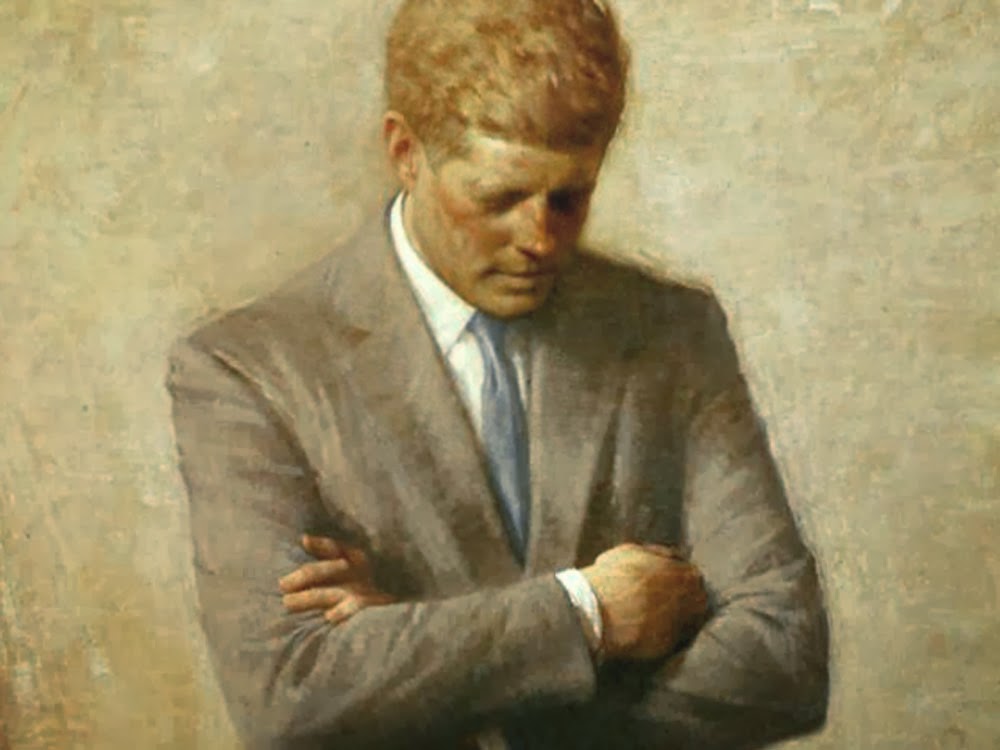
I also took some time to read some of Kennedy’s speeches, including his famous inaugural where he challenged us to “ask not what your country can do for you, ask what you can do for your country.” I quoted the entire speech below, but I warn you, it will get you thinking. I find it quite alarming when I compare the ideology behind it to what is so often expressed today by our leaders and educators and even churches.
Liberals and Conservatives today try to claim Kennedy as their own, but this is laughable in light of the lack of principle and depth that has enslaved our modern discourse and has left us directionless, rudderless, tossed to and fro by the enemies of freedom, both from afar and also from within. JFK doesn't fit either ideology today. But the desire of each side to say he would be one of them is an indicator of a great problem. Whatever we think, we know we are not what we should be. We are a nation that needs a leader, but we have forgotten how to find one. We are a nation that needs to compete in a new world, but we lack the education and edification to do so. We are a nation that needs spiritual repentance, but we don't know what direction to be penitent toward. This was not so much the case in Kennedy's time, although many of the seeds of our current crop had already been sown and taken root.
This is not to say that JFK was a great President or a poor one, truly we will never really know. But regardless, a real leader he was; not because of his office and not because of crafted words in a speech, but because he had the personal courage to lead a nation, rather than the tragic cowardliness that both parties lord over us in this hour.
I pray that we as a people return to the values of truth and sacrifice and responsibility, and leave behind forever our current admiration of mere intentions and articulate deception. Let us stop asking what our country can do for us. Let us stop fretting over the opinions of foreign tyrants. Let us stop finding fault in others. Instead, let us ask again what we can do for our country. Let us truly help the poor serve the people of the world. Let us remove the plank from our own eyes so that we can regain the moral standing necessary to lead.
For those who think freedom is fixed, for those who think tyranny is not crouching at our door, for those who think someone else is their brother's keeper; they are ignorant of history. History is not forgiving of such attitudes and we will not escape the all too foreseeable calamities that mankind has brought upon itself time and time again. We must reject such attitudes and set a new course before the long train of abuses in our bureaucracies and institutions is too difficult to overcome and freedom is lost forever.
Another President was celebrated this week. He reminded us 150 years ago that we should not despair, but that this nation, under God, can have a new birth of freedom. This is still true because to date, government of the people, by the people and for the people has not yet perished from the earth. I pray that We The People will inform and educate ourselves, and not simply repeat the propaganda that misinforms our culture in every way, and has divided our common house.
John F. Kennedy's Inaugural Address, January 20, 1961
We observe today not a victory of party, but a celebration of freedom — symbolizing an end, as well as a beginning — signifying renewal, as well as change. For I have sworn before you and Almighty God the same solemn oath our forebears prescribed nearly a century and three quarters ago.
The world is very different now. For man holds in his mortal hands the power to abolish all forms of human poverty and all forms of human life. And yet the same revolutionary beliefs for which our forebears fought are still at issue around the globe — the belief that the rights of man come not from the generosity of the state, but from the hand of God.
We dare not forget today that we are the heirs of that first revolution. Let the word go forth from this time and place, to friend and foe alike, that the torch has been passed to a new generation of Americans — born in this century, tempered by war, disciplined by a hard and bitter peace, proud of our ancient heritage — and unwilling to witness or permit the slow undoing of those human rights to which this Nation has always been committed, and to which we are committed today at home and around the world.
Let every nation know, whether it wishes us well or ill, that we shall pay any price, bear any burden, meet any hardship, support any friend, oppose any foe, in order to assure the survival and the success of liberty.
This much we pledge — and more.
To those old allies whose cultural and spiritual origins we share, we pledge the loyalty of faithful friends. United, there is little we cannot do in a host of cooperative ventures. Divided, there is little we can do — for we dare not meet a powerful challenge at odds and split asunder.
To those new States whom we welcome to the ranks of the free, we pledge our word that one form of colonial control shall not have passed away merely to be replaced by a far more iron tyranny. We shall not always expect to find them supporting our view. But we shall always hope to find them strongly supporting their own freedom — and to remember that, in the past, those who foolishly sought power by riding the back of the tiger ended up inside.
To those peoples in the huts and villages across the globe struggling to break the bonds of mass misery, we pledge our best efforts to help them help themselves, for whatever period is required — not because the Communists may be doing it, not because we seek their votes, but because it is right. If a free society cannot help the many who are poor, it cannot save the few who are rich.
To our sister republics south of our border, we offer a special pledge — to convert our good words into good deeds — in a new alliance for progress — to assist free men and free governments in casting off the chains of poverty. But this peaceful revolution of hope cannot become the prey of hostile powers. Let all our neighbours know that we shall join with them to oppose aggression or subversion anywhere in the Americas. And let every other power know that this Hemisphere intends to remain the master of its own house.
To that world assembly of sovereign states, the United Nations, our last best hope in an age where the instruments of war have far outpaced the instruments of peace, we renew our pledge of support — to prevent it from becoming merely a forum for invective — to strengthen its shield of the new and the weak — and to enlarge the area in which its writ may run.
Finally, to those nations who would make themselves our adversary, we offer not a pledge but a request: that both sides begin anew the quest for peace, before the dark powers of destruction unleashed by science engulf all humanity in planned or accidental self-destruction.
We dare not tempt them with weakness. For only when our arms are sufficient beyond doubt can we be certain beyond doubt that they will never be employed.
But neither can two great and powerful groups of nations take comfort from our present course — both sides overburdened by the cost of modern weapons, both rightly alarmed by the steady spread of the deadly atom, yet both racing to alter that uncertain balance of terror that stays the hand of mankind's final war.
So let us begin anew — remembering on both sides that civility is not a sign of weakness, and sincerity is always subject to proof. Let us never negotiate out of fear. But let us never fear to negotiate.
Let both sides explore what problems unite us instead of belabouring those problems which divide us.
Let both sides, for the first time, formulate serious and precise proposals for the inspection and control of arms — and bring the absolute power to destroy other nations under the absolute control of all nations.
Let both sides seek to invoke the wonders of science instead of its terrors. Together let us explore the stars, conquer the deserts, eradicate disease, tap the ocean depths, and encourage the arts and commerce.
Let both sides unite to heed in all corners of the earth the command of Isaiah — to "undo the heavy burdens -. and to let the oppressed go free."
And if a beachhead of cooperation may push back the jungle of suspicion, let both sides join in creating a new endeavour, not a new balance of power, but a new world of law, where the strong are just and the weak secure and the peace preserved.
All this will not be finished in the first 100 days. Nor will it be finished in the first 1,000 days, nor in the life of this Administration, nor even perhaps in our lifetime on this planet. But let us begin.
In your hands, my fellow citizens, more than in mine, will rest the final success or failure of our course. Since this country was founded, each generation of Americans has been summoned to give testimony to its national loyalty. The graves of young Americans who answered the call to service surround the globe.
Now the trumpet summons us again — not as a call to bear arms, though arms we need; not as a call to battle, though embattled we are — but a call to bear the burden of a long twilight struggle, year in and year out, "rejoicing in hope, patient in tribulation" — a struggle against the common enemies of man: tyranny, poverty, disease, and war itself.
Can we forge against these enemies a grand and global alliance, North and South, East and West, that can assure a more fruitful life for all mankind? Will you join in that historic effort?
In the long history of the world, only a few generations have been granted the role of defending freedom in its hour of maximum danger. I do not shank from this responsibility — I welcome it. I do not believe that any of us would exchange places with any other people or any other generation. The energy, the faith, the devotion which we bring to this endeavour will light our country and all who serve it — and the glow from that fire can truly light the world.
And so, my fellow Americans: ask not what your country can do for you — ask what you can do for your country.
My fellow citizens of the world: ask not what America will do for you, but what together we can do for the freedom of man.
Finally, whether you are citizens of America or citizens of the world, ask of us the same high standards of strength and sacrifice which we ask of you. With a good conscience our only sure reward, with history the final judge of our deeds, let us go forth to lead the land we love, asking His blessing and His help, but knowing that here on earth God's work must truly be our own.
PSF
Jun 18, 2013
The Lost Blogger
So, why did you stop blogging? I get asked that from time to time.
Have you ever spent long hours on a project where you neglect to click "save," then something happens and you lose all of your work and have to start over, but you can't recover emotionally, so you just quit and walk away from it for a while? That's what happened to this blog in May of 2010. Something happened.
It was going along better than ever: regular posts, increasing readership, creative juices flowing. At the time, I was writing often about the television show Lost and the themes and subject matter it presented. I had found the show particularly fascinating because it was brilliantly incorporating religion, science, philosophy, literature and all of the tensions between them. It wasn't the usual tripe on television. It was smart and it appeared to be going against the usual shallow television world of action without consequence. The show posed good questions that real people struggle to answer, but need to explore anyway. Lost could have been a show for the ages, to be debated and discussed for generations.
But behind all of my excitement about the cultural phenomenon I was writing about was a sense of foreboding, a dark feeling of impending doom, a nagging notion that the show would fall short of it's potential. Still, as the show was coming to an end, I wrote a series of blogs entitled "Why I love Lost."
Before the finale, a friend asked me what I thought would be the most disappointing ending. I said the worst case scenario is that the show would betray all of it's themes and just have some disconnected ending where mysteries are not resolved, where characters are inconsistent, conflicts are minimized, and have some kind of amateur plot turn where it turns out that everyone had always been dead and they all go to heaven or whatever and live happily ever after. "Any show on TV can end like that," I said to him, "It would be the ultimate cop-out from cowardly writers who chickened out when they had the opportunity to draw conclusions about right or wrong, truth or falsehood."
Horrified, I sat on the couch and watched the finale with my supportive wife, and my worst fear was realized. It was exactly like the worst case scenario I described to my friend.
The finale concluded, Kristy and I just looked at each other, turned off the TV and didn't say a word. We went upstairs and got ready for bed, still in stunned silence. I remember brushing my teeth for a seemingly endless time as I tried to recover from what whatever it's called when you get assaulted by a television show. My friend who I shared my worst case scenario with sent me a text, "I am so, so sorry..." With toothpaste dripping from my mouth and my toothbrush clamped between my teeth, I grabbed my phone and texted back, "I don't even want to talk about it."
More to the point, I didn't want to blog about it. Nor did I want blog about anything else. Except for a copy of an article I was asked to write for someone else's blog, I didn't write anything.
For six years, I had been a Lost evangelist, helping people see what really was going on in the show. I was one of those people, who could waste your whole evening explaining to you why you should watch it. I was excited that there was a show that would actually suggest there is right and wrong, that certain things in life are black and white. It was a show that would demonstrate that there are consequences for our actions, and a need for redemption and forgiveness outside of our own abilities. For a time, it was a rare admission from Hollywood that there are actual truths about human society and behavior that we need to stop ignoring in deference to political correctness or whatever the reason. But the way the show ended betrayed all of that, and in fact, it betrayed any intellectual or artistic value the show may have had. It became corny, and well, lost.
I sold my Lost DVDs for cheap at a garage sale and have never watched any part of it again. Today, I cannot recommend the show to anyone. Don't rent it, don't buy it. You are better off renting something silly like Cops and Robbersons instead.
One unexpected result of the Lost debacle is that it cured me of television. At first, I didn't want to watch any show that the Lost actors would later appear in. But, even now, there are no shows that are on the "must watch" list for me. Sure, there are a couple of enjoyable shows out there that I watch if it fits my schedule. But if I miss an episode or two, it doesn't matter. I don't Hulu them, I just move on. I don't care. There are better things to do.
Occasionally, I get a random email from someone I don't know asking me to update this blog. Often, they are asking me to finish my comment on Lost. So there you have it. There's the update. I will blog of it no more...
PSF
Have you ever spent long hours on a project where you neglect to click "save," then something happens and you lose all of your work and have to start over, but you can't recover emotionally, so you just quit and walk away from it for a while? That's what happened to this blog in May of 2010. Something happened.
It was going along better than ever: regular posts, increasing readership, creative juices flowing. At the time, I was writing often about the television show Lost and the themes and subject matter it presented. I had found the show particularly fascinating because it was brilliantly incorporating religion, science, philosophy, literature and all of the tensions between them. It wasn't the usual tripe on television. It was smart and it appeared to be going against the usual shallow television world of action without consequence. The show posed good questions that real people struggle to answer, but need to explore anyway. Lost could have been a show for the ages, to be debated and discussed for generations.
But behind all of my excitement about the cultural phenomenon I was writing about was a sense of foreboding, a dark feeling of impending doom, a nagging notion that the show would fall short of it's potential. Still, as the show was coming to an end, I wrote a series of blogs entitled "Why I love Lost."
Before the finale, a friend asked me what I thought would be the most disappointing ending. I said the worst case scenario is that the show would betray all of it's themes and just have some disconnected ending where mysteries are not resolved, where characters are inconsistent, conflicts are minimized, and have some kind of amateur plot turn where it turns out that everyone had always been dead and they all go to heaven or whatever and live happily ever after. "Any show on TV can end like that," I said to him, "It would be the ultimate cop-out from cowardly writers who chickened out when they had the opportunity to draw conclusions about right or wrong, truth or falsehood."
 |
| Let's make sure we offend everyone in the name of not offending anyone... |
The finale concluded, Kristy and I just looked at each other, turned off the TV and didn't say a word. We went upstairs and got ready for bed, still in stunned silence. I remember brushing my teeth for a seemingly endless time as I tried to recover from what whatever it's called when you get assaulted by a television show. My friend who I shared my worst case scenario with sent me a text, "I am so, so sorry..." With toothpaste dripping from my mouth and my toothbrush clamped between my teeth, I grabbed my phone and texted back, "I don't even want to talk about it."
More to the point, I didn't want to blog about it. Nor did I want blog about anything else. Except for a copy of an article I was asked to write for someone else's blog, I didn't write anything.
For six years, I had been a Lost evangelist, helping people see what really was going on in the show. I was one of those people, who could waste your whole evening explaining to you why you should watch it. I was excited that there was a show that would actually suggest there is right and wrong, that certain things in life are black and white. It was a show that would demonstrate that there are consequences for our actions, and a need for redemption and forgiveness outside of our own abilities. For a time, it was a rare admission from Hollywood that there are actual truths about human society and behavior that we need to stop ignoring in deference to political correctness or whatever the reason. But the way the show ended betrayed all of that, and in fact, it betrayed any intellectual or artistic value the show may have had. It became corny, and well, lost.
I sold my Lost DVDs for cheap at a garage sale and have never watched any part of it again. Today, I cannot recommend the show to anyone. Don't rent it, don't buy it. You are better off renting something silly like Cops and Robbersons instead.
One unexpected result of the Lost debacle is that it cured me of television. At first, I didn't want to watch any show that the Lost actors would later appear in. But, even now, there are no shows that are on the "must watch" list for me. Sure, there are a couple of enjoyable shows out there that I watch if it fits my schedule. But if I miss an episode or two, it doesn't matter. I don't Hulu them, I just move on. I don't care. There are better things to do.
Occasionally, I get a random email from someone I don't know asking me to update this blog. Often, they are asking me to finish my comment on Lost. So there you have it. There's the update. I will blog of it no more...
PSF
Mar 21, 2011
Going Beyond the Surface in Your Oikos
 |
| Need to buy a TV? |
I used to work for a major electronics company that used to exist. I worked there back in the day where sales people were required to wear a tie and a coat. No, not this wasn't the 1950's, this was in the mid-1990's, before the advent of Best Buy and the casual untrained salesperson.
This company was very serious about well trained and well groomed salespeople. They actually issued all employees special blazers to wear; a gray one and a blue one, and required good hygiene and professional appearance. "Sales Counselors", as we were called, were only paid by commission back in those days, and in those days, a man could make a lot of money selling televisions. Especially if you were a very large man, so large that you required a special order company blazer.
Mike was such a man. Big and tall and big in the other direction too. Friendly, knowledgeable, aggressive and crafty. He was one of the top TV sales people in the entire company. He could sell you and extended warranty even if you didn't buy a product to go with it. Customers would spot his friendly frame the moment they walked in the door, and march right to him with their wallets open, leaving us average height blazers to scavenger for whatever potential sales were left in his wake.
I liked Mike very much. I enjoyed working with him, even though it probably meant I would make less money. We worked together for 3 years at that store, and I thought I knew him pretty well.
One day, he asked me if I would help him move. He had let me borrow his car a couple of times while mine was in the shop, so I figured I owed him one (or more.) So I said "sure."
When I arrived at his house in an average neighborhood, he had a typical grass lawn with some low maintenance shrubbery. But I was stunned to see what I saw when I walked in the door.
Squalor.
It was unbelievable. To this day, it was the filthiest house I've ever seen in my life. It was plain dirty. When I say dirty, I mean literal piles of dirt. On the floor, in the couch, everywhere. The house was infested with all sorts of vermin, including cats, roaches and unidentifiable critters. My thesaurus does not have a word to adequately describe the toxic and nearly visible odor.
His wife came out of the kitchen and greeted me warmly, thanking me for coming over to help. His kids were in the back yard playing. I won't even describe the kitchen, it was worse than you can imagine. Mike was standing next to me, looking over his home as if he hadn't noticed it's condition, and visibly shrinking in size as he could no doubt sense by surprise and grief.
I wanted to cry, I couldn't believe it. I kept asking myself, "What was going on in this man's life, with his family, that would lead to this kind of lifestyle at home?" It couldn't be healthy, it wasn't livable, yet, it was where this family resided. I knew Mike was making nearly 6 figures based on commissions reports that were posted at the store to inspire the rest of us. Was he in some kind of financial trouble? Depression? Tragedy? What happened to this family?
I gladly and quickly helped him get his stuff out of the house. This burden on him and his family had been well hidden, until he and I stood in his front yard on a hot day in a sea of moldy, ruined furniture. We stood there looking at it, smelling it, and Mike, with a tear coming down his cheek, decided that most of it just needed to go to the dump. He was right about that, and that is where we moved his stuff.
Nearly every day after that, a humbled Mike thanked me for my help. He could hardly thank me without breaking down. He never said it explicitly, but I know he also was thanking me for not telling any of our other co-workers, and thanking me for remaining his friend.
How well do you know your oikos? These people that you work with, go to coffee with, study with - really, do you know them? Have you ever asked yourself why God put you in their life? Have you ever asked God to show you? Truth is, many relationships today are surfacy, even within our oikos that are supposedly "close." But as Christ followers, we are called to love our oikos, even when we discover something that is unlovable about them. That's how Jesus loves us - and there is something unlovable about you and me for sure.
My encouragement is to pray that God will give you courage when He takes you beyond the surface of the life of someone in your oikos. I think He'll answer that prayer in ways that will amaze you if you trust Him. You won't always find the squalor I found, but whatever you find, you will find that you are the right person to be there. God has planned it that way. That's why it's your oikos. And you have a great message of hope that is universal, so don't worry.
I'm sure in Mike's case, God didn't put me there only to help him move. After that day, I made sure that Mike knew I was a Christ follower. I wasn't sure if he knew that before. I thought I was his friend before, but I don't think I truly was until I saw his home. I invited him and his family to church with me, they came a few times, and he had a lot of good questions. We did a few things socially after work together and I tried to just be his friend.
Turns out, Mike's wife was a Christian, but hadn't really trusted God much for a while, and Mike had been to church as a kid but struggled to accept God's grace. I don't know where Mike and his family are today, or where they stand with their faith. Shortly after his move, I moved to a new town and a new oikos. I never discovered why his house was in such disarray. But today, I am praying for his oikos, whoever they are, whomever God has surrounded him with, that they would be a blessing to him
Who knows, maybe Mike is following Jesus and blessing those in his oikos today? Hope so...
SCF
twitter.com/scottfurrow
Jan 17, 2011
Martin Luther King Jr. Memorial Post
Many don't know that this year, the Martin Luther King Jr. Memorial will be dedicated in Washington D.C.
Fewer people are aware that I wrote a blog about MLK Jr. about leadership a couple of years ago that gets a rather large bit of Internet traffic according to Google.
So, since today is the MLK Jr. birthday holiday, I thought I'd link you to that two year old post instead of writing a new one. Not only will it keep that article alive, but it also gives the appearance that I am posting something new today! It's a two-fer!
http://scottfurrow.blogspot.com/2008/01/martin-luther-king-day.html
Have a great MLK holiday!
SCF
Fewer people are aware that I wrote a blog about MLK Jr. about leadership a couple of years ago that gets a rather large bit of Internet traffic according to Google.
So, since today is the MLK Jr. birthday holiday, I thought I'd link you to that two year old post instead of writing a new one. Not only will it keep that article alive, but it also gives the appearance that I am posting something new today! It's a two-fer!
http://scottfurrow.blogspot.com/2008/01/martin-luther-king-day.html
Have a great MLK holiday!
SCF
Jun 14, 2010
I Know, I Know...
One of the most interesting thing about blogging is that you never know who is reading your stuff. So, my recent Lost posts drew some attention, and people I don't even know have written me asking me to finsih the series and mostly, to comment on the controversial Lost finale.
So to you, and you know who you are, even if I don't know who you are - hopefully by the end of next week. And, for those of you who follow this blog regularly, you know that waiting for me to post a promised post is a little bit like leaving the porch light on for Jimmy Hoffa.
[Space here for you to enjoy or research the hilarity of that remark.]
SCF
So to you, and you know who you are, even if I don't know who you are - hopefully by the end of next week. And, for those of you who follow this blog regularly, you know that waiting for me to post a promised post is a little bit like leaving the porch light on for Jimmy Hoffa.
[Space here for you to enjoy or research the hilarity of that remark.]
SCF
Subscribe to:
Posts (Atom)