Showing posts with label Culture. Show all posts

Feb 5, 2014

Coke and the CBO - Take Your Medicine

I am often asked how one goes about being truly informed when we live in such a world that is dominated by shallow reporting, reactive politics, and news as entertainment rather than journalism.  Admittedly, this is difficult to do.  But below is one step that helps.

Today, not just the news, but many  "advancements" in science, education, philosophy, sociology, religion and other disciplines are no longer driven by a desire to know, but instead, are driven by advocacy (and the funding that comes with it) and political correctness.  For many, it is more important to be right, or to win an election, or to receive attention (especially the kind that comes with funding) than it is to make authentic and helpful discovery.

Even worse, our culture is content to spread falsehood simply because we believe it passionately and have even acted faithfully according to those false beliefs.  We are a "willfully ignorant" society, as CS Lewis would say, and too often we are so convinced of the truth, we don't think it's necessary to look at the facts.  I'm amazed at how many people repost hateful and ignorant posts from anonymous and unresearched Facebook Pages, for example.   More incredibly is how often someone proudly tweets out thier own shallowness and ignorance in less than 140 characters.  How many people have been fired recently for their tweets?  #HasJustineLandedYet

This willful ignorance is enslaving and destructive - and its getting worse.  Truth only resides in reality;  other residents include fact and consequence.  Unfortunately, fewer and fewer people can even find it on the map.

Anyway, I can go on and on about that.  But that's not why I'm writing.  Here's an exercise that I use which I believe helps give a better idea of what is true about a situation or idea.   I deliberately try to find some sources that have clear biases, yet, call out their own side for being outright false or misleading.  Its a great discipline, and risky in the modern environment, to point out that your own side might just be wrong, or hateful, or ignorant, or a bully, or racist, or whatever the negative label du jour is.

So, as an example, there are two articles published today that I think you should read.  One is from a conservative publication, the other is from a liberal publication.  Both are critical of their own side, without rejecting their respective ideologies.

To make this useful, try this:   If you are a conservative, you may want to focus on what the author of the liberal National Journal writes about the Obama Administration.  But don't do that.  Likewise, if you are a liberal, you may be tempted to focus your attention on what the conservative Commentary says about Glenn Beck and other conservatives.  Again, don't.  Focus instead on your own ideological preference and consider how your side can do better.

I realize the issues discussed by these articles are far deeper than just a TV ad or one report from the Congressional Budget Office (CBO).  A good defense can be made for both because of the complex and deeper issues of poverty and its roots.  But that's not what this exercise is about.  It's about this:

“Do not judge, or you too will be judged. For in the same way you judge others, you will be judged, and with the measure you use, it will be measured to you. “Why do you look at the speck of sawdust in your brother’s eye and pay no attention to the plank in your own eye? How can you say to your brother, ‘Let me take the speck out of your eye,’ when all the time there is a plank in your own eye? You hypocrite, first take the plank out of your own eye, and then you will see clearly to remove the speck from your brother’s eye." - Jesus Christ from Matthew 7.

Funny thing is, this works.  When conservatives correct conservatives about what it means to be an American by using Ronald Reagan, it carries a lot of weight and improves the discussion.  But when liberals correct conservatives about what it means to be an American, and engage in name calling, no one listens, and it just makes things worse.

Likewise, when liberals correct liberals about the facts and figures of Obamacare, and they use the words of President Obama against himself, it tasks liberals to reject their own political spin.  But when conservatives correct liberals about the facts and figures of Obamacare, and engage in name calling, no one listens, and the political spin is simply adjusted to obscure the truth even further.

So, some recommended reading for today:

From the conservative Commentary:

http://www.commentarymagazine.com/2014/02/04/a-disturbing-conservative-reaction-to-the-coke-ad/

From the liberal National Journal:

http://www.nationaljournal.com/white-house/truth-and-consequences-of-obamacare-distortion-20140205

PSF

Nov 22, 2013

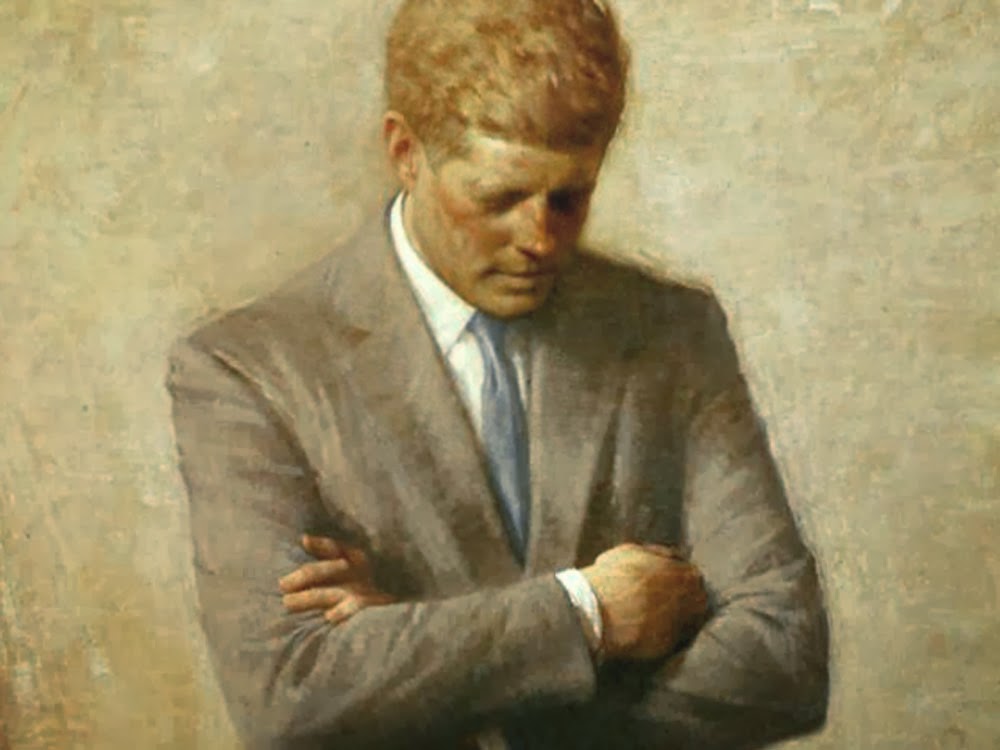
JFK - What a Leader Used To Be

I’ve watched and read quite a bit about the Kennedy Assassination this week, which happened 50 years ago today.  I have learned quite a bit, and recommend a couple of programs.  PBS’s American Experience series is usually very good, and the JFK edition just broadcast is no exception.  I also enjoyed PBS’s Frontline, where, much to my amazement, they appeared to scientifically prove that the “magic bullet” was not so magic after all, and that bullet was indeed fired by Oswald and it definitely passed through the President, into Governor Connally, just as the Warren Commission said it did.  Oliver Stone was not available for comment.

I also took some time to read some of Kennedy’s speeches, including his famous inaugural where he challenged us to “ask not what your country can do for you, ask what you can do for your country.”  I quoted the entire speech below, but I warn you, it will get you thinking.  I find it quite alarming when I compare the ideology behind it to what is so often expressed today by our leaders and educators and even churches.

Liberals and Conservatives today try to claim Kennedy as their own, but this is laughable in light of the lack of principle and depth that has enslaved our modern discourse and has left us directionless, rudderless, tossed to and fro by the enemies of freedom, both from afar and also from within.  JFK doesn't fit either ideology today.  But the desire of each side to say he would be one of them is an indicator of a great problem.  Whatever we think, we know we are not what we should be.  We are a nation that needs a leader, but we have forgotten how to find one.  We are a nation that needs to compete in a new world, but we lack the education and edification to do so.  We are a nation that needs spiritual repentance, but we don't know what direction to be penitent toward.  This was not so much the case in Kennedy's time, although many of the seeds of our current crop had already been sown and taken root.

This is not to say that JFK was a great President or a poor one, truly we will never really know.  But regardless, a real leader he was; not because of his office and not because of crafted words in a speech, but because he had the personal courage to lead a nation, rather than the tragic cowardliness that both parties lord over us in this hour.

I pray that we as a people return to the values of truth and sacrifice and responsibility, and leave behind forever our current admiration of mere intentions and articulate deception.  Let us stop asking what our country can do for us.  Let us stop fretting over the opinions of foreign tyrants.  Let us stop finding fault in others.  Instead, let us ask again what we can do for our country.  Let us truly help the poor serve the people of the world.  Let us remove the plank from our own eyes so that we can regain the moral standing necessary to lead.

For those who think freedom is fixed, for those who think tyranny is not crouching at our door, for those who think someone else is their brother's keeper; they are ignorant of history.  History is not forgiving of such attitudes and we will not escape the all too foreseeable calamities that mankind has brought upon itself time and time again.  We must reject such attitudes and set a new course before the long train of abuses in our bureaucracies and institutions is too difficult to overcome and freedom is lost forever.

Another President was celebrated this week.  He reminded us 150 years ago that we should not despair, but that this nation, under God, can have a new birth of freedom.  This is still true because to date, government of the people, by the people and for the people has not yet perished from the earth.  I pray that We The People will inform and educate ourselves, and not simply repeat the propaganda that misinforms our culture in every way, and has divided our common house.

John F. Kennedy's Inaugural Address, January 20, 1961

We observe today not a victory of party, but a celebration of freedom — symbolizing an end, as well as a beginning — signifying renewal, as well as change. For I have sworn before you and Almighty God the same solemn oath our forebears prescribed nearly a century and three quarters ago.

The world is very different now. For man holds in his mortal hands the power to abolish all forms of human poverty and all forms of human life. And yet the same revolutionary beliefs for which our forebears fought are still at issue around the globe — the belief that the rights of man come not from the generosity of the state, but from the hand of God.

We dare not forget today that we are the heirs of that first revolution. Let the word go forth from this time and place, to friend and foe alike, that the torch has been passed to a new generation of Americans — born in this century, tempered by war, disciplined by a hard and bitter peace, proud of our ancient heritage — and unwilling to witness or permit the slow undoing of those human rights to which this Nation has always been committed, and to which we are committed today at home and around the world.

Let every nation know, whether it wishes us well or ill, that we shall pay any price, bear any burden, meet any hardship, support any friend, oppose any foe, in order to assure the survival and the success of liberty.

This much we pledge — and more.

To those old allies whose cultural and spiritual origins we share, we pledge the loyalty of faithful friends. United, there is little we cannot do in a host of cooperative ventures. Divided, there is little we can do — for we dare not meet a powerful challenge at odds and split asunder.

To those new States whom we welcome to the ranks of the free, we pledge our word that one form of colonial control shall not have passed away merely to be replaced by a far more iron tyranny. We shall not always expect to find them supporting our view. But we shall always hope to find them strongly supporting their own freedom — and to remember that, in the past, those who foolishly sought power by riding the back of the tiger ended up inside.

To those peoples in the huts and villages across the globe struggling to break the bonds of mass misery, we pledge our best efforts to help them help themselves, for whatever period is required — not because the Communists may be doing it, not because we seek their votes, but because it is right. If a free society cannot help the many who are poor, it cannot save the few who are rich.

To our sister republics south of our border, we offer a special pledge — to convert our good words into good deeds — in a new alliance for progress — to assist free men and free governments in casting off the chains of poverty. But this peaceful revolution of hope cannot become the prey of hostile powers. Let all our neighbours know that we shall join with them to oppose aggression or subversion anywhere in the Americas. And let every other power know that this Hemisphere intends to remain the master of its own house.

To that world assembly of sovereign states, the United Nations, our last best hope in an age where the instruments of war have far outpaced the instruments of peace, we renew our pledge of support — to prevent it from becoming merely a forum for invective — to strengthen its shield of the new and the weak — and to enlarge the area in which its writ may run.

Finally, to those nations who would make themselves our adversary, we offer not a pledge but a request: that both sides begin anew the quest for peace, before the dark powers of destruction unleashed by science engulf all humanity in planned or accidental self-destruction.
We dare not tempt them with weakness. For only when our arms are sufficient beyond doubt can we be certain beyond doubt that they will never be employed.

But neither can two great and powerful groups of nations take comfort from our present course — both sides overburdened by the cost of modern weapons, both rightly alarmed by the steady spread of the deadly atom, yet both racing to alter that uncertain balance of terror that stays the hand of mankind's final war.

So let us begin anew — remembering on both sides that civility is not a sign of weakness, and sincerity is always subject to proof. Let us never negotiate out of fear. But let us never fear to negotiate.

Let both sides explore what problems unite us instead of belabouring those problems which divide us.
Let both sides, for the first time, formulate serious and precise proposals for the inspection and control of arms — and bring the absolute power to destroy other nations under the absolute control of all nations.

Let both sides seek to invoke the wonders of science instead of its terrors. Together let us explore the stars, conquer the deserts, eradicate disease, tap the ocean depths, and encourage the arts and commerce.

Let both sides unite to heed in all corners of the earth the command of Isaiah — to "undo the heavy burdens -. and to let the oppressed go free."

And if a beachhead of cooperation may push back the jungle of suspicion, let both sides join in creating a new endeavour, not a new balance of power, but a new world of law, where the strong are just and the weak secure and the peace preserved.

All this will not be finished in the first 100 days. Nor will it be finished in the first 1,000 days, nor in the life of this Administration, nor even perhaps in our lifetime on this planet. But let us begin.
In your hands, my fellow citizens, more than in mine, will rest the final success or failure of our course. Since this country was founded, each generation of Americans has been summoned to give testimony to its national loyalty. The graves of young Americans who answered the call to service surround the globe.

Now the trumpet summons us again — not as a call to bear arms, though arms we need; not as a call to battle, though embattled we are — but a call to bear the burden of a long twilight struggle, year in and year out, "rejoicing in hope, patient in tribulation" — a struggle against the common enemies of man: tyranny, poverty, disease, and war itself.

Can we forge against these enemies a grand and global alliance, North and South, East and West, that can assure a more fruitful life for all mankind? Will you join in that historic effort?

In the long history of the world, only a few generations have been granted the role of defending freedom in its hour of maximum danger. I do not shank from this responsibility — I welcome it. I do not believe that any of us would exchange places with any other people or any other generation. The energy, the faith, the devotion which we bring to this endeavour will light our country and all who serve it — and the glow from that fire can truly light the world.

And so, my fellow Americans: ask not what your country can do for you — ask what you can do for your country.

My fellow citizens of the world: ask not what America will do for you, but what together we can do for the freedom of man.

Finally, whether you are citizens of America or citizens of the world, ask of us the same high standards of strength and sacrifice which we ask of you. With a good conscience our only sure reward, with history the final judge of our deeds, let us go forth to lead the land we love, asking His blessing and His help, but knowing that here on earth God's work must truly be our own.


PSF

Jun 18, 2013

The Lost Blogger

So, why did you stop blogging?   I get asked that from time to time.

Have you ever spent long hours on a project where you neglect to click "save," then something happens and you lose all of your work and have to start over, but you can't recover emotionally, so you just quit and walk away from it for a while?  That's what happened to this blog in May of 2010.  Something happened.

It was going along better than ever:  regular posts, increasing readership, creative juices flowing.  At the time, I was writing often about the television show Lost and the themes and subject matter it presented.  I had found the show particularly fascinating because it was brilliantly incorporating religion, science, philosophy, literature and all of the tensions between them.  It wasn't the usual tripe on television.  It was smart and it appeared to be going against the usual shallow television world of action without consequence.  The show posed good questions that real people struggle to answer, but need to explore anyway.  Lost could have been a show for the ages, to be debated and discussed for generations.

But behind all of my excitement about the cultural phenomenon I was writing about was a sense of foreboding, a dark feeling of impending doom, a nagging notion that the show would fall short of it's potential.   Still, as the show was coming to an end, I wrote a series of blogs entitled "Why I love Lost."

Before the finale, a friend asked me what I thought would be the most disappointing ending.  I said the worst case scenario is that the show would betray all of it's themes and just have some disconnected ending where mysteries are not resolved, where characters are inconsistent, conflicts are minimized, and have some kind of amateur plot turn where it turns out that everyone had always been dead and they all go to heaven or whatever and live happily ever after.  "Any show on TV can end like that," I said to him, "It would be the ultimate cop-out from cowardly writers who chickened out when they had the opportunity to draw conclusions about right or wrong, truth or falsehood."

Let's make sure we offend everyone in the name of not offending anyone...
Horrified, I sat on the couch and watched the finale with my supportive wife, and my worst fear was realized.  It was exactly like the worst case scenario I described to my friend. 

The finale concluded, Kristy and I just looked at each other, turned off the TV and didn't say a word.  We went upstairs and got ready for bed, still in stunned silence.  I remember brushing my teeth for a seemingly endless time as I tried to recover from what whatever it's called when you get assaulted by a television show.  My friend who I shared my worst case scenario with sent me a text, "I am so, so sorry..."  With toothpaste dripping from my mouth and my toothbrush clamped between my teeth, I grabbed my phone and texted back,  "I don't even want to talk about it."

More to the point, I didn't want to blog about it.   Nor did I want blog about anything else.  Except for a copy of an article I was asked to write for someone else's blog, I didn't write anything.

For six years, I had been a Lost evangelist, helping people see what really was going on in the show.  I was one of those people, who could waste your whole evening explaining to you why you should watch it.  I was excited that there was a show that would actually suggest there is right and wrong, that certain things in life are black and white.  It was a show that would demonstrate that there are consequences for our actions, and a need for redemption and forgiveness outside of our own abilities.  For a time, it was a rare admission from Hollywood that there are actual truths about human society and behavior that we need to stop ignoring in deference to political correctness or whatever the reason.  But the way the show ended betrayed all of that, and in fact, it betrayed any intellectual or artistic value the show may have had.  It became corny, and well, lost.

I sold my Lost DVDs for cheap at a garage sale and have never watched any part of it again.   Today, I cannot recommend the show to anyone.  Don't rent it, don't buy it.  You are better off renting something silly like Cops and Robbersons instead.

One unexpected result of the Lost debacle is that it cured me of television.  At first, I didn't want to watch any show that the Lost actors would later appear in.  But, even now, there are no shows that are on the "must watch" list for me.  Sure, there are a couple of enjoyable shows out there that I watch if it fits my schedule.  But if I miss an episode or two, it doesn't matter.   I don't Hulu them, I just move on.  I don't care.  There are better things to do.

Occasionally, I get a random email from someone I don't know asking me to update this blog. Often, they are asking me to finish my comment on Lost.  So there you have it.  There's the update.  I will blog of it no more...

PSF

Jan 17, 2011

Martin Luther King Jr. Memorial Post

Many don't know that this year, the Martin Luther King Jr. Memorial will be dedicated in Washington D.C.  

Fewer people are aware that I wrote a blog about MLK Jr. about leadership a couple of years ago that gets a rather large bit of Internet traffic according to Google.  

So, since today is the MLK Jr. birthday holiday, I thought I'd link you to that two year old post instead of writing a new one.   Not only will it keep that article alive, but it also gives the appearance that I am posting something new today!  It's a two-fer!

http://scottfurrow.blogspot.com/2008/01/martin-luther-king-day.html

Have a great MLK holiday!

SCF

May 22, 2010

Why I Like Lost - Part IV


(This is the fourth post explaining in some detail why I like the TV show Lost.   Please read the first post here, then continue with part II and III and then this list below...)

Why I Like Lost - Part IV
Alternate Reality Games

In an episode of Lost early in season 2, there is a video being watched by some of the characters and at the end, in small print we see, only for a second:

(c) The Hanso Foundation  1980  All Rights Reserved.

To date, there has been no discussion of The Hanso Foundation on the show, although, we do see advertisements for The Hanso Foundation in the backgrounds of various character flashback scenes, and we have heard the name "Hanso" now in some parts of the story.  But at the time, it was seemingly just a detail in a well crafted show.  We have come to learn since then that details like this are not mere window dressing in Lost.

A few months later, I was in an airplane and someone had left behind a major news magazine, I can't remember if it was Newsweek or Time, but one of those.  My eye caught a strange advertisement:


What?  The Hanso Foundation?  I had remembered the Lost reference and wondered what in the world I was looking at.   There is no reference to Lost in the ad, or ABC television or anything else.  Just an advertisement from "The Hanso Foundation" defending itself from the contents of some new book called Bad Twin.  Turns out, the same ad appeared is major newspapers around the world, including the New York Times.

Let's be clear:  There is no such thing as The Hanso Foundation.  But they have ads in real-life newspapers.  And, if you noticed in the ad, they have a real-life website.  So, naturally, I went to the website (it was recently taken down, I'm hoping it will come back up for the finale.)  It was the coolest website I've ever seen, rich with graphics and detail.  Numerous pages in the site detailing scientific advances being made in all sorts of areas by The Hanso Foundation.  It included real email addresses of company execs (you'd get an automated response if you emailed them) and get this, the phone number worked!  You could call up, be transferred to various departments and personnel and leave a message.  I never did get a call back...

In the real life advertisement from the fake Hanso Foundation, it criticizes a newly published booked called Bad Twin, by Gary Troup.  This book is for real.   It is in stock right now at Amazon.com.   A real-life ad from a fake organization about a real-life book.

At the time, I saw the book in Costco and I was drawn to the cover flap about the author, which reads:


ABOUT THE AUTHOR

Bad Twin is the highly-anticipated new novel by acclaimed mystery writer Gary Troup. Bad Twin was delivered to Hyperion just days before Troup boarded Oceanic Flight 815, which was lost in flight from Sydney, Australia to Los Angeles in September 2004. He remains missing and is presumed dead.

Oceanic Airlines is a fake airline.  Its the one that crashed on the fake island that is the setting for the fictional show Lost.  There is no flight 815.  And the people who rode on Oceanic Flight 815 also don't exist, including the author of Bad Twin, Gary Troup.

So, there is a fake organization placing real-life ads in real-life newspapers defending itself from the claims made in a real-life book written by a made-up character from a fictional TV show who died in a fake plane crash on a non-existent airline. 

Was Gary Troup on the fictional Oceanic Flight 815?  Well, rumor has it he was killed on the ground during the pilot episode by getting sucked through the engine that was still revving in all the wreckage.  However, there is only one actual reference to him.  The characters in the show organize all the wreckage and one pile is full of books.  One character, Sawyer, is often doing some reading.   It is mentioned that a manuscript for some book is found, and later we see Sawyer reading it:


This is the only reference to Bad Twin or Gary Troup in the show.  

By the way, if you take the letters "Gary Troup" and move them around, you find that his name is an anagram for "purgatory."  Are our castaways lost souls in purgatory?  Well, the writers have said no, but we'll see...

The next thing I noticed was television commercials for The Hanso Foundation, first during Lost, later on other programs on ABC.  Here's the original ad, one of several.  (Note:  DO NOT call the number on the add as today its someone else who will try to get you to change your long distance carrier.)


Then, crazy things started to happen.  Hanso Foundation people started showing up in real-life advertisements for Sprite, Jeep and other companies.  The Hanso Foundation is even listed in the credits for Mission Impossible III under "Special Thanks."

Then, the Hanso site changed.  It supposedly gets hacked, and someone from the outside is determined to expose the Hanso Foundation for its dirty deeds.  

A game begins.  

At Comic-Con, the annual comic book convention in San Diego, during a Lost forum, a woman named "Rachel Blake" stands up and starts shouting at the real-life writers and the real-life actors about the evils of the fake Hanso Foundation.  The writers and actors simply point out that the Hanso Foundation is fictional, but she presses that it is for real.  Before being taken away by security, she throws out a website URL, which was the beginning of what came to be known as "The Lost Experience."  Interestingly, the actors and writers were wearing clues for fans to discover for this game.

"The Lost Experience" is an alternate reality game (ARG) where real life fans of the show are invited into the Lost's mythical storyline to play a role.  There are numerous websites tracking how this game worked out if you want to investigate, but it was amazing.   How amazing?  Get this:  in the TV show Lost, there are candy bars called "Apollo Bars."  For The Lost Experience, real-life Apollo Bars were manufactured and placed all over the world for fans to find, giving them clues to the game. 

No kidding.  A real-life Willy Wonka contest.  The video below tells a bit of the story of the global game that was truly the most incredible game I've ever seen.


Wow.

For most seasons of Lost, there have been alternate reality games, although the other ones not so big.  One year, Oceanic Airlines started putting out real-life press releases about reconstituting service.  They placed real-life billboards all over the world in each of the cities that the Lost characters come from.

Who has time for all of this?  Well, I don't know, I sure don't.  Fortunately, there were great blogs that people who apparently have time for all this would keep up so that you could follow the games and get caught up without actually playing them.

All this is to say that the ARGs brought Lost to a new level.  Its why it is an unprecedented global phenomenon.  Fans actually became part of the story.  Genius. 

Here's a television commercial for Oceanic Airlines that appeared on several TV shows and gives a URL for the game that began that season.  If you didn't know about Lost, you probably just thought it was some new airline...


.... Why I like Lost - Part V coming soon...

SCF

May 21, 2010

Why I Like Lost - Part III


(This is the third post explaining in some detail why I like the TV show Lost.   Please read the first post here, then continue with part II and then this list below...)

Why I Like Lost - Part III

The Spiritual Themes

John Locke: "Why do you find it so hard to believe?"
Jack Shepherd: "Why do you find it so easy?"
John Locke: "Its never been easy!"

I was in a Lost online forum reading posts speculating about the mysteries of the show and what it is actually about.  For some reason, this particular forum was spending lots of time debating the scientific aspects of the show, believing it is primarily a show about science fiction. 

I chimed in with my own opinion, relaying some of what I posted here in Part II, and also the issues the characters are dealing with spiritually.  You would not believe the rage I got from these folks in suggesting that the show is not actually about science, but about faith.  But I was able to prove my point, much to their dismay, by simply asking them to watch the episode conveniently entitled "Man of Science, Man of Faith."  That theme, faith vs. science, is a constant in the show, and for my friends in that forum, they reluctantly had to agree.

Spiritual themes are significant in Lost; a title itself with a spiritual meaning.  In the show, those who trust science are often proven wrong, but sometimes they are right.  Faith is put to the test in similar ways, where sometimes the faithful are rewarded, but other times, they discover they have been deceived.  The show moves along with the characters repeatedly placing their trust in each other, in themselves, in the island, in God, or in science.  This is how we live life too; it makes the show and its characters even more compelling.

Deception is a danger, both in faith and science.  In science, you have to trust that physical laws are always constant and that assembled data is correct, otherwise, you can scientifically come to a false conclusion and be deceived.  Likewise, faith requires some kind of teaching or understanding, even if you conjure up some kind of belief all by yourself, it's still contrived from some kind of attitude or experience.  But often, when our faith is misplaced, we are deceived and disaster follows.  The road to Hell is paved with good intentions, so to speak. 

Lost handles this subject very well.  The nature of deception is that while we are deceived, we don't know we are deceived, we don't believe we are deceived, we will even argue that we are not deceived.  We don't know we are deceived; that's why we are deceived.  We find out we are deceived once truth is forced upon us by the circumstances of reality and truth.  In Lost, no one is sure who to trust, or what to trust, but they are forced to make a choice and place their faith somewhere.  The great thing is, the audience also isn't sure who or what to trust.  It brings us along in the adventure that is true to life's challenges and risks. 

Another spiritual theme is free will vs. predestination.  How much control do we have in our life?  Its is all planned out for us or can we choose to change our direction?  Is our fate predetermined by God or the universe or our DNA or upbringing?  These questions have been significant in every area of human thought.  Something people have always inherently asked is, "Why am I here?"  This question is the ultimate question our heroes in the story are asking.  Are they on the island by chance or by fate?  The viewer can relate quite well to that question.

Good vs. evil?  Also a huge question.  Who is good?  Who is evil?  How can we be sure?  Is everything black and white or is there a middle road? One episode to go, and we only have this partially figured out.

Recently, one of Lost's head writers confirmed that the show is about "redemption."  Redemption is indeed the main conflict the characters are going through spiritually.   With this in mind, the show presents the audience with the basic spiritual questions people ask.  Can a person change?  Does a person have to atone for their sins, or is there forgiveness and grace out there?  Does one redeem oneself or is someone (or something) else the redeemer?  Is there a God or not?  What happens when you die?  Does anything really matter?

Again, this is compelling.  Redemption of some kind is at the heart of all religion and spiritual thought.  The characters wrestle with these issues.  They aren't even sure where they are, but they consider it may be Heaven, Hell or Purgatory or some similar place.  Their perception is driven by their attitude about past sins and decisions and whether or not they can still have value and hope and purpose.  The power of love is intertwined in each case.

Naturally, as a Christian minister, these topics and the way they are treated by the writers is very interesting to me.   I don't think the show is going to have some kind of distinctive Christian resolution, but I am very sure the writers have been to Sunday school a time or two:

Ben: "Thomas the Apostle. When Jesus wanted to return to Judea, knowing that he would probably be murdered there, Thomas said to the others, "Let us also go there and we might die with him." But Thomas was not remembered for this bravery. His claim to fame came later when he refuses to acknowledge the resurrection. He just couldn't wrap his mind around it. The story goes that he needed to touch Jesus wounds to be convinced."
Jack: "So was he?"
Ben: "Of course he was. We are all convinced sooner or later, Jack."


So, it has given me much to discuss with my friends who believe differently than I do,   A good article about Lost and faith was published in the Wall Street Journal this week.  It has a couple of significant spoilers, so don't read it if you haven't watched all through Season 5.


Here is one of my favorite scenes as a character (Locke) questions his faith.


... Why I Like Lost - Part IV - Coming Soon...

SCF

May 20, 2010

Why I Like Lost - Part II

This is the second post explaining in some detail why I like the TV show lost.   Please read the first post here, then continue with this list below...

Why I Like Lost - Part II

The Character Depth Goes Beyond the Story

"Uh, the bald guy's name is 'John Locke'?" I said to my wife.  I knew that naming a character after one of the biggest philosophers in history had to be more than just a minor oddity of the show.  It meant something.  But what are these writers doing?

Let's see.  A bunch of people stranded on an island and its looking like rescue is not coming soon, if ever.  What would that give them?  Ah, a clean slate, Tabula Rasa, as the real life John Locke would have called it.  The character John Locke relies on this philosophy and derives encouragement and confidence from it.  His view?  The survivors of Oceanic Flight 815 get a fresh start on the island;  an opportunity to start over without prejudice.  They now have free will to choose a different path because of this opportunity.

This could be the theme of the show.  Unless John Locke's postulations are wrong, then of course, some other philosophical point of view may be more relevant to our story.  Fortunately, we have a character named Desmond David Hume, whose namesake tells us about determinism, which would indicate that there is no blank slate, but instead, our destinies have already been predetermined by our environment.  Everyone was going to end up on that island one way or another, no matter what.  It was fate.

Why is this kind of thing relevant at all?  Well, see, on the island, a new society is being developed, and someone has to be in charge.  Who should the leader be?  How will the society be governed?  Who gives the orders and who follows them?  What if there is division or criminal behavior?   This new society must get developed politically somehow.  If everyone has a clean slate, then anyone could morally qualify to lead.  But if not, then people cannot escape from any sins in their past.  This will affect who leads and how.

Fortunately, a character named Rousseau is on the scene, a nod to the savvy viewer that a Social Contract (as presented by the real life philosopher named Rousseau) must be formed one way or another.  There is no way around that.  Unless of course you want anarchy, then lucky for you, we have another character named Mikhail Bakunin (aka "patchy") who creates quite a bit of chaos.  That should be expected because the real life Mikhail Bakunin was a Russian anarchist philosopher who rejected every kind of governing system and a real critic of Rousseau. 

But what if philosophy, the search for truth, is resolved by a religion?  Well good news, we have that too, especially Christian references.   We have Bible characters such as Adam and Eve, Ruth and Naomi, and perhaps more importantly, Jacob.  We even have a mysterious character who appears to have risen from the dead named "Christian Shepherd."  Isn't that a title for Jesus?  Is he the Savior or just a false Christ?  Maybe he came to seek and save what was ... 'lost'?

Perhaps we should inquire from a character named Charlotte Staples Lewis, who interestingly, shares a similar name with the famous Chronicles of Narnia writer C.S. Lewis.  The real C.S. Lewis is also a famous Christian writer, using the Narnia stories as an allegory for the Gospel.  Is Lost then an allegory for a Christian worldview?  Maybe.  Maybe not.  I think you'd get an objection to that theory from Jeremy Bentham, another character who would advocate keeping religion and government separate, if his namesake has any bearing on the discussion.  He's not much of a fan of natural law either.

Can you see how this is totally mesmerizing and addicting?  Do you know now why Lost fans are so annoying?  This can go on and on.  Turns out, most if not all characters are named after (or otherwise reference) famous philosophers, scientists, literary figures, writers, mathematicians, physicists, and Biblical characters.  It is a significant part of the Lost story.

If you haven't watched it yet, just wait until you meet Henry Gale, who shares his name with the Wizard of Oz character.  Henry Gale's character might in fact be the best television character of all time.

Oh and by the way.  If a character or two don't seem to have any reference at all to a real life person, then maybe you should take their name and enter it into an anagram server.  You might just find a clue or an idea that will make you wonder.  You may even discover that one man you think you know is really an other man.

The characters are great on their own and the exposition above isn't necessary to enjoy the show.  Each character is well developed and interesting.  Truth is, they don't stay consistent to their namesakes above anyway.  However, knowing who they are named after does add a significant element to the show and a depth that I have never seen, outside of the Bible anyway.  Its those genius writers again.

For your enjoyment, a speed drawing of our hero (?),  John Locke:


... Why I Like Lost - Part III - Coming Soon...

SCF

May 19, 2010

Why I Like Lost - Part 1

As the TV show Lost comes to a conclusion in just a few days, I thought now would be the last time to finally deliver as promised and blog about why I watch this show.   The show is impossible to watch if you haven't watched from the beginning, so you shouldn't even consider watching the finale if you aren't caught up.  Plus, if you want to enjoy the show later on DVD, it will spoil it.  So start from the beginning if you must...

Because I recognize that I am "one of those people" when it comes to Lost, I'll try to keep this as succinct as possible. 

Somewhere along the line, as I got older, I started to appreciate different kinds of art for the sake of whatever it is that makes it, well, art.  When I see a painting, I am often astonished to think how it is that the artist can take an idea and turn a blank canvas, a Tabula rasa if you will, into no simply a picture of something but also a representation of an opinion, a culture, a philosophy, a theology or an idea.  Good art makes us reflect on what matters in life and inspires the kinds of questions all humans ask themselves but often have a hard time expressing.

Storytelling is an art form.  Like any other form of art, it can be well done or it can be done poorly.  A good story includes captivating character development, compelling themes that illicit emotion because they tap into real human conflict, and thoughtful implications that do not require explicit explanation or agreement.  These things are delivered by a narrator or exposition, but through the story itself,  prompting consideration and trust from the audience.  A good story is not about how much it costs or special effects or technical achievement.  Take those things away from the movie Avatar, for example, and all you have a sophomoric tale that spoon feeds the audience and removes the need for intelligence.  A good story, on the other hand, makes a profound statement through characters and plot and dialogue and dignifies the audience rather than demeaning them.  Lost is a story that is rich in all that is the art of storytelling.

This isn't to say that it is without flaw, certainly the story shouldn't have taken certain turns.  But the reason I like Lost is because of the depth of the storytelling and the characters and its underlying themes.  It is a story about the most basic human questions about life, God, meaning, purpose and love.  All of those elements present the viewer with much to ponder about what matters most in life.  The show itself doesn't promote truth or spiritual realities, but it raises the questions that must be raised in dealing with those subjects.  For me, it has prompted real life discussion of these issues with many of my friends, and in a couple of them, life changing results.   That is good storytelling. 

So, what is so great about Lost?  I'll make a list. 

The Writing 

I have a theory.  Because of all the reality shows now on TV, Lost had at its disposal the best writers.  This is the most creative show on TV in a long time.  Its storytelling technique is brilliant and unusual.  The way the story unfolds is intricate yet riveting.   The dialogue is smart and consistent.  The show is emotionally moving and thrilling at some times.

My wife actually started watching before I did back in season one.  She doesn't normally stop everything just to watch a TV show, but in the Fall of 2004 she suddenly was totally into this new show Lost.  For all I knew, it was just another reality show with people stranded on an island, and I was surprised that she was so into it.  By the 5th week, I had to check it out, and I watched my first episode entitled "White Rabbit."

There were several things that intrigued me about this episode.  Mostly, I was surprised that my wife was not happy with me interrupting to ask questions trying to get caught up as she was watching intently, as if there was more going on than I was aware.  I didn't get it, but I knew there was something more to this show that just people stuck on an island after a three hour tour.  So I followed the rabbit down that hole and within a couple of weeks, I understood this show was special and I was hooked.

If you are thinking about watching, a warning:

A friend of mine returned from a 2 year mission trip to China and stayed at my house while we were on vacation so that he could look for work in San Diego.  He asked me if he missed anything important while he was gone, so I gave him the DVDs for seasons one and two of Lost.  He said he found himself excusing himself from appointments just so he could get back to the house and watch more Lost.  He ended up making no progress in the job search and had to plan another trip later.

That is good storytelling.

Here is how it begins...


.... Why I like Lost - Part II coming soon...


SCF


Feb 2, 2010

Lost: It's About Redemption

The long wait is over. 

I know I need to explain why this is my favorite show (actually, its the only show I watch right now), but for now, a video to celebrate the beginning of Season 6. 

This is my favorite promo commercial.  While some think Lost is about science fiction, its actually a show about redemption.  How the writers will ultimately handle the issues of redemption in the story remains to be seen, but from an increasingly dark and frustrated culture, the theme is definitely one that we all need to seriously explore.


SCF

Dec 26, 2009

Observations on Christmas Day Travel

This Christmas was the first time I ever traveled by air on Christmas Day.   I've flown on Christmas Eve before, and I think my wife and I may have driven to my parent's home once on Christmas Day.   But,  I've never been to an airport on Christmas until this year as we flew to Seattle on Christmas morning to visit my in-laws.

Being the Christmas Eve shopper that I am, I have noticed a distinct difference between the shopping experience on Christmas Eve and that on the day before Christmas Eve, known as Christmas Adam.   December 23rd is a stressful, busy, and hectic shopping day, full of bad attitudes and tired people fighting with each other.  But December 24th has a different feel.

Christmas Eve shoppers are more friendly, have more joy, and while they are tired, people respect each other more.  I don't know if its because Christmas Eve is a special day on its own, or maybe its because Christmas Eve shoppers are already on vacation from work.  Perhaps its because Christmas Eve shopping is a shared experience with other like minded procrastinators; its always easier to get along with people for which you have an affinity.  Regardless, there is a difference between the two days, and Christmas Eve is a better day to shop.

So, I wondered if I would notice a similar difference between air travel on Christmas Eve, which unlike the shopping experience of that day, is hectic and stressful, and air travel on Christmas Day.

I took some notes.

  • Traffic is almost non-existant on Christmas morning.  The flow of freeway traffic held only 3 cars, including mine.
  • The airport was busy, but more orderly than usual.  Everyone took time to say "Merry Christmas"to each other, while parking, unloading luggage, checking in, boarding, etc.  Even the Federal Government TSA employees said it to everyone.   I didn't hear anyone say "Happy Holidays", not even airport employees.  "Happy Holidays" is about fear for most people, not sincre greeting.  Few really say it for positive reasons, so few actually say it unless they are forced by fear.
  • Even most of the airport workers seemed more relaxed and friendly than usual.   Many people working on Christmas are voluntarily giving up thier day off for extra pay.  I figured the few grumpy workers I saw were the ones being asked to work because not enough of thier co-workers volunteered.
  • I should have expected long term parking to be full, especailly the better lots.  However, I found parking quickly and without hassle.
  • Our parking shuttle driver, Maria, was very talkative.  In the 5 or 6 minute drive, her passengers learned all about her family and what is going on in her life.  Her mother in Tijuana had angioplasty last month and is doing very well.  Maria is glad that she is alive and home for Christmas.  Sadly, Maria's Christmas plans were to finish her shift and then go to the city jail to visit her son who was just arrested for stealing cars.  She assured us that he committed no acts of violence, and that she lights a candle for her son each day hoping he will remember how he was raised.  I think this kind of personal story would be irritating to most passengers on most days.  But on Christmas Day, she had everyone's kind attention.  No one seemed to mind that I delayed their disembarkment from the shuttle to say a quick prayer for Maria and her son.
  • There are lots of kids and babies at the airport on Christmas morning.  They all seemed tired and subdued.  I saw two kids about 10 years old with thier heads down on the talbe in the airport McDonald's.   I figured they were up very early to have Christmas unwrapping before leaving, or they were just doing all they could emotionally to cope with the fact that they wouldn't be opening gifts till much later in the day, wherever thier destination might be.  Either would have been tough for me at their age.
  • The terminal was much more festive than usual.  Everything was decorated, even the little booths the ticket agents stand behind when they scan your variously obtained boarding passes.
  • More than just saying "Merry Christmas," the TSA was also in a great mood, and entertained us with these announcements:  
    • "Ladies and Gentlemen, if your feet are colder this Christmas than usual, then perhaps you should come pick up your socks that you left in a tub at the security check-in line."
    • "Ladies and Gentlemen, there's no better time than while waiting for your flight on Christmas morning to call some loved ones and wish them a Merry Christmas.  If you want to call your loved ones, but are unable to, then please return to the securtiy checkpoint and pick up the mobile phone you left with our screeners."
    • "Ladies, if you would like to rekindle the joy you had as a kid at Christmas time, then you might consider coming back to the security area and picking up your age-defying make-up kit."
  • People with children under two years old get to "pre-board" the aircraft, which means board before anyone else.  Normally, this may be only a family or two, but the pre-boarding line was very long.  I stood in line contemplating the meaning of "pre-boarding", wondering how one could board the plane before boarding the plane.  They should call it something else.
  • I witnessed a Christmas tradition that is reluctantly shared by many American families.  I watched one father and one mother putting thier kids on a plane on Christmas Day to go and spend it with their other divorced parent.
  • It was clear that many people fly on Christmas Day who don't fly very often.  They are hesitant about each part of the routine.  They actually pay attention to the safety lecture given by the flight attendants before the flight.
  • Passengers are dressed much nicer on Christmas Day than usual.  Perhaps this adds to the better demeanor and well behaved kids.
  • I only saw only one rude customer.  He was out of sorts because he was ticketed to be in aisle one, and although it was First Class, he kept telling the now frazzled lady at the gate, "This just won't do."  I have sat in that seat before.  Its the one where you have to stare directly into a wall 2 feet in front of you for the entire trip, as there are no seats in front of you.  It is the worst seat on the plane.  By the time you land, you have lost a measurable percentage of your sanity.  Unfortunately for him, and the attendant he was harassing, no one was willing to trade with him.
  • People at the airport where we landed were less in a good mood.  Tired and ready to finally reach thier destination, everyone was quiet, except for a couple having an argument about what elevator to take down to the baggage claim.
  • The passenger loading area outside the baggage claim was the only difficulty.  Lots of cars, one broken down, and tons of luggage not fitting into the cars they were to be picked up in.  It was good to get out of there in one peice.
My wife and I often fly using airline award miles and sometimes we can't get on the same flight.  Also, sometimes she leaves to visit her folks before I do and comes back later than I do.  This allows her to have a longer visit, but also to give much needed help around the house.  But it makes it so we don't actually fly together much of the time.  This Christmas, I got to fly seated next to my wife and my son.  That alone made it a great flight and a great Christmas morning.

I'm flying home on New Year's Day.  I doubt I'll write anything about it.  I'll just want to know who won the game when I land.

SCF

Nov 26, 2009

Thanksgiving and Washington and History Speaking for Itself


Whereas it is the duty of all Nations to acknowledge the providence of almighty God, to obey his will, to be grateful for his benefits, and humbly to implore his protection and favor - and Whereas both Houses of Congress have by their joint Committee requested me "to recommend to the People of the United States a day of public thanksgiving and prayer to be observed by acknowledging with grateful hearts the many signal favors of Almighty God, especially by affording them an opportunity peaceably to establish a form of government for their safety and happiness.

Now therefore I do recommend and assign Thursday the 26th day of November next to be devoted by the People of these States to the service of that great and glorious Being, who is the beneficent Author of all the good that was, that is, or that will be - That we may then all unite in rendering unto him our sincere and humble thanks - for his kind care and protection of the People of this country previous to their becoming a Nation - for the signal and manifold mercies, and the favorable interpositions of his providence, which we experienced in the course and conclusion of the late war - for the great degree of tranquillity, union, and plenty, which we have since enjoyed - for the peaceable and rational manner in which we have been enabled to establish constitutions of government for our safety and happiness, and particularly the national One now lately instituted, for the civil and religious liberty with which we are blessed, and the means we have of acquiring and diffusing useful knowledge; and in general for all the great and various favors which he hath been pleased to confer upon us.


And also that we may then unite in most humbly offering our prayers and supplications to the great Lord and Ruler of Nations and beseech him to pardon our national and other transgressions - to enable us all, whether in public or private stations, to perform our several and relative duties properly and punctually - to render our national government a blessing to all the People, by constantly being a government of wise, just, and constitutional laws, discreetly and faithfully executed and obeyed - to protect and guide all Sovereigns and Nations (especially such as have shewn kindness unto us) and to bless them with good government, peace, and concord - To promote the knowledge and practice of true religion and virtue, and the increase of science among them and Us - and generally to grant unto all mankind such a degree of temporal prosperity as he alone knows to be best.

Given under my hand at the City of New York the third day of October in the year of our Lord 1789.


Happy Thanksgiving!

SCF

Nov 10, 2009

My View of the Berlin Wall: Ideology Has Consequences


With this week's 20th anniversary of the fall of the Berlin Wall, I am reminded that one of the most important experiences I've had in my life is that I got to see and feel that wall - and I don't mean just the powerful museum pieces at certain Presidential Libraries. I mean the real deal, in Germany, separating West and East Berlin. I will never ever forget it. Its stench is palpable to me even now.

When I saw it, I was in high school, in Germany on a church mission trip (another story for another day.) But the impact for me wasn't the mission in this case, it was my tour of what was then still East Berlin.

We got off our West Berlin tour bus at Checkpoint Charlie, and got onto a special East German tour bus. Before being allowed to enter East Germany, each one of us was questioned and frisked by machine gun toting military personnel. They did this right on the bus, row by row, keeping everyone confined until they were done.

After a bunch of threats related to rule keeping and staying with the tour group, verification of our identities, and finally being approved for entry, we were assigned a special government sanctioned tour guide. He was a large man with a friendly, yet intimidating way about him. I don't know if they were allowed to have bowling leagues in his country, but if they were, he was definitely a part of one. He wore the right shirt, anyway. I think he sincerely loved his job as tour guide. By the time we returned, I decided that he had the best job in the Eastern Bloc.

As we entered into East Berlin, the sun became blocked by a thick gray cloud cover that was mysteriously not present on the West side. Many of us remarked about this, and then the bus full of casually dressed tourists got quiet as we drove further into the country. The cloud gave the promise of rain, but didn't let out a drop. It merely provided a gloomy atmosphere that matched the looks on the faces of the East Germans we would encounter.

The tour guide had a well prepared script, filled with sometimes laughable communist propaganda. He proudly noted that there were ten building projects going on in East Berlin as part of a Gorbachev initiative with the East German government. Ten building projects didn't seem like a big deal to me. But, looking out the window of our rickety tour bus, it was clear why this rather hopeful statement was being made.

We were driving past these construction projects that were supposedly the first major projects since the end of World War II, more than 40 years earlier. Construction workers were clearing debris piles that had been left there since the end of the Nazi regime. For decades, citizens had lived among the bombed out buildings with who knows what under the piles. No wonder ten building projects was a good sign.

It is these workers that drew my attention the most. First of all, there were very few of them around, for what appeared to be large projects. Leaning on shovels, slowly tossing mix into cement mixers, these workers were hardly working. I remember their faces vividly to this day. Dirty and sad. They were moving slow and all had pronounced frowns as they looked longingly toward us free people on the bus. Every one of us noticed; no one said a word.

We eventually stopped for lunch at a government approved tourist break area. They had a western looking soda and ice cream shop, and a western looking bar and lunch stand. They even had western looking employees who wore the only smiles I saw outside of our bus.

I wasn't hungry.

It is at this point that one friend and I decided we'd like to visit some of the "non-tourist approved" locations, so we wandered off. We shouldn't have left the tour group. I'm also sure the tour guides shouldn't have allowed us to sneak off so easily. But somehow, we slipped away unnoticed.

We walked along a river that ran through the city until we came to a dock with some small rowboats tied to it. We stepped out and attempted to rent a boat from a recreational rental shack at the end of the short pier. The sad man inside clearly needed some business as no one was in a boat or riding a bike anywhere that we could see.

Now, I'm not sure where exactly we thought we would row, or what we would do when we got there. We had to know that we would eventually get caught and thrown into some gulag, but this didn't deter us at all. Instead, it seemed like we were doing something right, something important, something that might undermine the entire communist system, if we just rented a boat and paddled around for a while in defiance of the strict rules we had been given.

Looking back, I think I must have seen too many James Bond movies. I probably figured that if something went wrong and we were left behind by our tourist group, I could get out of East Berlin on my own. Someone would help me, either some old inventor like Q hiding out in some catacomb under a pile of rubble, or perhaps some Felix Lighter with the CIA already working on the inside. More likely, it would be some inappropriately named woman who would invariably be sent to kill me but would have been swept off her feet by my charm and wit. She'd help me get back over the wall like some modern day Rahab. Regardless, I wasn't worried that I couldn't escape.

What about my buddy who wandered off with me? Well, let's just say I was 007 and he was, well, 008, and we all know what always happens to 008, usually before the opening credits...

Oh, the row boat...

As we approached the hut where one would actually rent a boat, the man inside looked at us and closed the shutters and sealed himself inside. This seemed like an odd thing to do. But as we walked down the streets along the river, we got the same treatment from each shop owner. Apparently, they were not allowed to sell merchandise to naive free people who had wandered from their tour. They were business people just following orders. They behaved as if they were not happy about it, but my friend and I suspected that they knew they were being monitored and had no other choice. This suspicion led us to believe that we were also being monitored, so the James Bond fantasy ended. We made it back to our tour and back on the bus without anyone commenting on our disappearance.

We stopped next at the Soviet War memorial, Treptower park, full of graves and monuments to the massive Soviet war dead during WWII. There were huge statues and sayings of certain famous thinkers with great academic ideas that didn't account for human greed and corruption or reality in general. Notions of a society where each person would contribute according to their ability and need; an interesting ideology. Its the way of thinking that led to the building of the Wall - a wall not to keep people out, but to keep people in.

I left some illegal literature around the park that I sneaked in to the country. Opium, the statues would call it.

I don't remember much else of the surreal experience, except that somewhere along the way, I found some East German coins and I smuggled them out in my socks.

Before we could get off the tour bus, we were all individually quizzed again about our identities and the information in our passports. This took quite a while to accomplish. They were much more aggressive this time than when we had arrived.

Everyone got the same questions, except for my buddy and me. We were the last two on the bus and got the third degree from a couple of machine gun toting scruffy looking military men. According to the translator, they wanted to know where we went when we left the tour group, why we wanted a boat, who we talked to, and what, if anything they gave us. They threatened to strip search us but reluctantly let us go, because it was time to do their fancy goose step changing of the guard thing.

So I have some worthless East German coins, and a valuable dose of the fear of tyranny.

The sun appeared again as we re-entered the West. Our western tour guide immediately took us to see the memorials on and around the wall of people who had been shot by their machine gun toting countrymen as they tried to go over the wall and enter freedom.

We then stopped at the spot where just one week earlier, President Ronald Reagan asked Mr. Gorbachev to "tear down this wall." The tour guide was in tears as were many of us, as he quoted the great speech in front of the Brandenburg Gate. The Berlin Wall was truly a monument to the focus of evil in the modern world. It belongs on the ash heap of history.

No, it belongs in museums. It belongs in the public view, in free cities, reminding us that freedom cannot be taken for granted, that our fellow human beings are capable of the most ruthless things. And its not just the communists or the ones everyone already call "bad guys." Hitler was elected freely and legally by the people. Even after it was clear he was a crazy thug and had consolidated power to himself, the shortsighted and selfish electorate still voted to approve his policies to a tune of 85%.

The memory of the wall should remind us of a simple truth:

Ideology has consequences.

It matters what our leaders actually believe. Tyranny and war follow when smart people don't ask independent questions they know need to be asked, but are afraid the answer might contradict their academic position or political gambling. So they don't ask, figuring its not really about life or death, its about who wins and who loses. Until everybody loses.

So, here's to those leaders in the 20th century, and there are several, who had the courage to question and expose the ideology of the enemy for what it was, in the face of controversy and criticism. They are why the Wall came down.

I wonder what leaders will do that in the 21st century? I hope those people come onto the scene soon.


SCF

Jul 4, 2009

A Document Forgotten, Due to the Fatiguing of Us into Compliance with Their Measures

I wonder how many of us have read this whole thing? Very few I'll bet. It's clearly no longer all that important, at least, not as important as certain trips to Argentina, obsessions over someone with 8 kids and a selfish marriage, the enchantment of the First Family, and of course Michael Jackson in general.

Since we know our government officials are no longer interested in reading legislation, even important life-altering legislation known to everyone to be "bad", perhaps We the People ought to do some reading. Those of us who can still read, anyway.

If you are in representative government today, this long forgotten museum piece ought to give you pause, maybe even the willies. I encourage you to read it as well. Those of you who can read, anyway.

IN CONGRESS, JULY 4, 1776
The unanimous Declaration of the thirteen united States of America

When in the Course of human events it becomes necessary for one people to dissolve the political bands which have connected them with another and to assume among the powers of the earth, the separate and equal station to which the Laws of Nature and of Nature's God entitle them, a decent respect to the opinions of mankind requires that they should declare the causes which impel them to the separation.

We hold these truths to be self-evident, that all men are created equal, that they are endowed by their Creator with certain unalienable Rights, that among these are Life, Liberty and the pursuit of Happiness. — That to secure these rights, Governments are instituted among Men, deriving their just powers from the consent of the governed, — That whenever any Form of Government becomes destructive of these ends, it is the Right of the People to alter or to abolish it, and to institute new Government, laying its foundation on such principles and organizing its powers in such form, as to them shall seem most likely to effect their Safety and Happiness. Prudence, indeed, will dictate that Governments long established should not be changed for light and transient causes; and accordingly all experience hath shewn that mankind are more disposed to suffer, while evils are sufferable than to right themselves by abolishing the forms to which they are accustomed. But when a long train of abuses and usurpations, pursuing invariably the same Object evinces a design to reduce them under absolute Despotism, it is their right, it is their duty, to throw off such Government, and to provide new Guards for their future security. — Such has been the patient sufferance of these Colonies; and such is now the necessity which constrains them to alter their former Systems of Government. The history of the present King of Great Britain is a history of repeated injuries and usurpations, all having in direct object the establishment of an absolute Tyranny over these States. To prove this, let Facts be submitted to a candid world.

He has refused his Assent to Laws, the most wholesome and necessary for the public good.

He has forbidden his Governors to pass Laws of immediate and pressing importance, unless suspended in their operation till his Assent should be obtained; and when so suspended, he has utterly neglected to attend to them.

He has refused to pass other Laws for the accommodation of large districts of people, unless those people would relinquish the right of Representation in the Legislature, a right inestimable to them and formidable to tyrants only.

He has called together legislative bodies at places unusual, uncomfortable, and distant from the depository of their Public Records, for the sole purpose of fatiguing them into compliance with his measures.

He has dissolved Representative Houses repeatedly, for opposing with manly firmness his invasions on the rights of the people.

He has refused for a long time, after such dissolutions, to cause others to be elected, whereby the Legislative Powers, incapable of Annihilation, have returned to the People at large for their exercise; the State remaining in the mean time exposed to all the dangers of invasion from without, and convulsions within.

He has endeavoured to prevent the population of these States; for that purpose obstructing the Laws for Naturalization of Foreigners; refusing to pass others to encourage their migrations hither, and raising the conditions of new Appropriations of Lands.

He has obstructed the Administration of Justice by refusing his Assent to Laws for establishing Judiciary Powers.

He has made Judges dependent on his Will alone for the tenure of their offices, and the amount and payment of their salaries.

He has erected a multitude of New Offices, and sent hither swarms of Officers to harass our people and eat out their substance.

He has kept among us, in times of peace, Standing Armies without the Consent of our legislatures.

He has affected to render the Military independent of and superior to the Civil Power.

He has combined with others to subject us to a jurisdiction foreign to our constitution, and unacknowledged by our laws; giving his Assent to their Acts of pretended Legislation:

For quartering large bodies of armed troops among us:

For protecting them, by a mock Trial from punishment for any Murders which they should commit on the Inhabitants of these States:

For cutting off our Trade with all parts of the world:

For imposing Taxes on us without our Consent:

For depriving us in many cases, of the benefit of Trial by Jury:

For transporting us beyond Seas to be tried for pretended offences:

For abolishing the free System of English Laws in a neighbouring Province, establishing therein an Arbitrary government, and enlarging its Boundaries so as to render it at once an example and fit instrument for introducing the same absolute rule into these Colonies

For taking away our Charters, abolishing our most valuable Laws and altering fundamentally the Forms of our Governments:

For suspending our own Legislatures, and declaring themselves invested with power to legislate for us in all cases whatsoever.

He has abdicated Government here, by declaring us out of his Protection and waging War against us.

He has plundered our seas, ravaged our coasts, burnt our towns, and destroyed the lives of our people.

He is at this time transporting large Armies of foreign Mercenaries to compleat the works of death, desolation, and tyranny, already begun with circumstances of Cruelty & Perfidy scarcely paralleled in the most barbarous ages, and totally unworthy the Head of a civilized nation.

He has constrained our fellow Citizens taken Captive on the high Seas to bear Arms against their Country, to become the executioners of their friends and Brethren, or to fall themselves by their Hands.

He has excited domestic insurrections amongst us, and has endeavoured to bring on the inhabitants of our frontiers, the merciless Indian Savages whose known rule of warfare, is an undistinguished destruction of all ages, sexes and conditions.

In every stage of these Oppressions We have Petitioned for Redress in the most humble terms: Our repeated Petitions have been answered only by repeated injury. A Prince, whose character is thus marked by every act which may define a Tyrant, is unfit to be the ruler of a free people.

Nor have We been wanting in attentions to our British brethren. We have warned them from time to time of attempts by their legislature to extend an unwarrantable jurisdiction over us. We have reminded them of the circumstances of our emigration and settlement here. We have appealed to their native justice and magnanimity, and we have conjured them by the ties of our common kindred to disavow these usurpations, which would inevitably interrupt our connections and correspondence. They too have been deaf to the voice of justice and of consanguinity. We must, therefore, acquiesce in the necessity, which denounces our Separation, and hold them, as we hold the rest of mankind, Enemies in War, in Peace Friends.

We, therefore, the Representatives of the united States of America, in General Congress, Assembled, appealing to the Supreme Judge of the world for the rectitude of our intentions, do, in the Name, and by Authority of the good People of these Colonies, solemnly publish and declare, That these united Colonies are, and of Right ought to be Free and Independent States, that they are Absolved from all Allegiance to the British Crown, and that all political connection between them and the State of Great Britain, is and ought to be totally dissolved; and that as Free and Independent States, they have full Power to levy War, conclude Peace, contract Alliances, establish Commerce, and to do all other Acts and Things which Independent States may of right do. — And for the support of this Declaration, with a firm reliance on the protection of Divine Providence, we mutually pledge to each other our Lives, our Fortunes, and our sacred Honor.

— John Hancock

New Hampshire:
Josiah Bartlett, William Whipple, Matthew Thornton

Massachusetts:
John Hancock, Samuel Adams, John Adams, Robert Treat Paine, Elbridge Gerry

Rhode Island:
Stephen Hopkins, William Ellery

Connecticut:
Roger Sherman, Samuel Huntington, William Williams, Oliver Wolcott

New York:
William Floyd, Philip Livingston, Francis Lewis, Lewis Morris

New Jersey:
Richard Stockton, John Witherspoon, Francis Hopkinson, John Hart, Abraham Clark

Pennsylvania:
Robert Morris, Benjamin Rush, Benjamin Franklin, John Morton, George Clymer, James Smith, George Taylor, James Wilson, George Ross

Delaware:
Caesar Rodney, George Read, Thomas McKean

Maryland:
Samuel Chase, William Paca, Thomas Stone, Charles Carroll of Carrollton

Virginia:
George Wythe, Richard Henry Lee, Thomas Jefferson, Benjamin Harrison, Thomas Nelson, Jr., Francis Lightfoot Lee, Carter Braxton

North Carolina:
William Hooper, Joseph Hewes, John Penn

South Carolina:
Edward Rutledge, Thomas Heyward, Jr., Thomas Lynch, Jr., Arthur Middleton

Georgia:
Button Gwinnett, Lyman Hall, George Walton


Happy Independence Day!

SCF