Showing posts with label Quotes. Show all posts

Nov 22, 2013

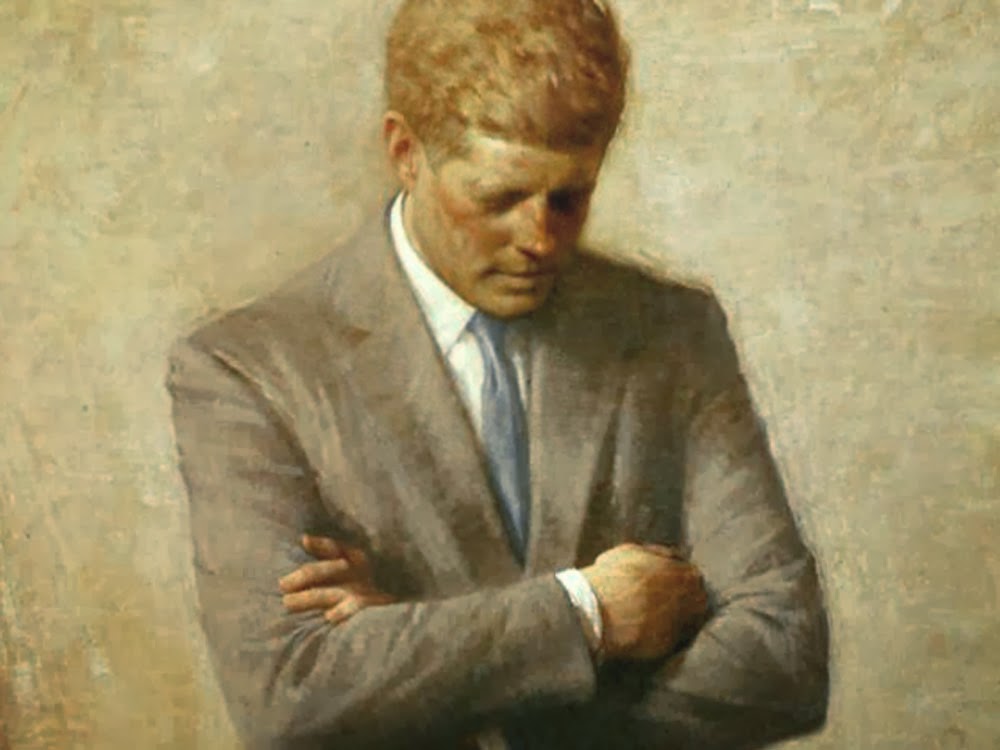
JFK - What a Leader Used To Be

I’ve watched and read quite a bit about the Kennedy Assassination this week, which happened 50 years ago today.  I have learned quite a bit, and recommend a couple of programs.  PBS’s American Experience series is usually very good, and the JFK edition just broadcast is no exception.  I also enjoyed PBS’s Frontline, where, much to my amazement, they appeared to scientifically prove that the “magic bullet” was not so magic after all, and that bullet was indeed fired by Oswald and it definitely passed through the President, into Governor Connally, just as the Warren Commission said it did.  Oliver Stone was not available for comment.

I also took some time to read some of Kennedy’s speeches, including his famous inaugural where he challenged us to “ask not what your country can do for you, ask what you can do for your country.”  I quoted the entire speech below, but I warn you, it will get you thinking.  I find it quite alarming when I compare the ideology behind it to what is so often expressed today by our leaders and educators and even churches.

Liberals and Conservatives today try to claim Kennedy as their own, but this is laughable in light of the lack of principle and depth that has enslaved our modern discourse and has left us directionless, rudderless, tossed to and fro by the enemies of freedom, both from afar and also from within.  JFK doesn't fit either ideology today.  But the desire of each side to say he would be one of them is an indicator of a great problem.  Whatever we think, we know we are not what we should be.  We are a nation that needs a leader, but we have forgotten how to find one.  We are a nation that needs to compete in a new world, but we lack the education and edification to do so.  We are a nation that needs spiritual repentance, but we don't know what direction to be penitent toward.  This was not so much the case in Kennedy's time, although many of the seeds of our current crop had already been sown and taken root.

This is not to say that JFK was a great President or a poor one, truly we will never really know.  But regardless, a real leader he was; not because of his office and not because of crafted words in a speech, but because he had the personal courage to lead a nation, rather than the tragic cowardliness that both parties lord over us in this hour.

I pray that we as a people return to the values of truth and sacrifice and responsibility, and leave behind forever our current admiration of mere intentions and articulate deception.  Let us stop asking what our country can do for us.  Let us stop fretting over the opinions of foreign tyrants.  Let us stop finding fault in others.  Instead, let us ask again what we can do for our country.  Let us truly help the poor serve the people of the world.  Let us remove the plank from our own eyes so that we can regain the moral standing necessary to lead.

For those who think freedom is fixed, for those who think tyranny is not crouching at our door, for those who think someone else is their brother's keeper; they are ignorant of history.  History is not forgiving of such attitudes and we will not escape the all too foreseeable calamities that mankind has brought upon itself time and time again.  We must reject such attitudes and set a new course before the long train of abuses in our bureaucracies and institutions is too difficult to overcome and freedom is lost forever.

Another President was celebrated this week.  He reminded us 150 years ago that we should not despair, but that this nation, under God, can have a new birth of freedom.  This is still true because to date, government of the people, by the people and for the people has not yet perished from the earth.  I pray that We The People will inform and educate ourselves, and not simply repeat the propaganda that misinforms our culture in every way, and has divided our common house.

John F. Kennedy's Inaugural Address, January 20, 1961

We observe today not a victory of party, but a celebration of freedom — symbolizing an end, as well as a beginning — signifying renewal, as well as change. For I have sworn before you and Almighty God the same solemn oath our forebears prescribed nearly a century and three quarters ago.

The world is very different now. For man holds in his mortal hands the power to abolish all forms of human poverty and all forms of human life. And yet the same revolutionary beliefs for which our forebears fought are still at issue around the globe — the belief that the rights of man come not from the generosity of the state, but from the hand of God.

We dare not forget today that we are the heirs of that first revolution. Let the word go forth from this time and place, to friend and foe alike, that the torch has been passed to a new generation of Americans — born in this century, tempered by war, disciplined by a hard and bitter peace, proud of our ancient heritage — and unwilling to witness or permit the slow undoing of those human rights to which this Nation has always been committed, and to which we are committed today at home and around the world.

Let every nation know, whether it wishes us well or ill, that we shall pay any price, bear any burden, meet any hardship, support any friend, oppose any foe, in order to assure the survival and the success of liberty.

This much we pledge — and more.

To those old allies whose cultural and spiritual origins we share, we pledge the loyalty of faithful friends. United, there is little we cannot do in a host of cooperative ventures. Divided, there is little we can do — for we dare not meet a powerful challenge at odds and split asunder.

To those new States whom we welcome to the ranks of the free, we pledge our word that one form of colonial control shall not have passed away merely to be replaced by a far more iron tyranny. We shall not always expect to find them supporting our view. But we shall always hope to find them strongly supporting their own freedom — and to remember that, in the past, those who foolishly sought power by riding the back of the tiger ended up inside.

To those peoples in the huts and villages across the globe struggling to break the bonds of mass misery, we pledge our best efforts to help them help themselves, for whatever period is required — not because the Communists may be doing it, not because we seek their votes, but because it is right. If a free society cannot help the many who are poor, it cannot save the few who are rich.

To our sister republics south of our border, we offer a special pledge — to convert our good words into good deeds — in a new alliance for progress — to assist free men and free governments in casting off the chains of poverty. But this peaceful revolution of hope cannot become the prey of hostile powers. Let all our neighbours know that we shall join with them to oppose aggression or subversion anywhere in the Americas. And let every other power know that this Hemisphere intends to remain the master of its own house.

To that world assembly of sovereign states, the United Nations, our last best hope in an age where the instruments of war have far outpaced the instruments of peace, we renew our pledge of support — to prevent it from becoming merely a forum for invective — to strengthen its shield of the new and the weak — and to enlarge the area in which its writ may run.

Finally, to those nations who would make themselves our adversary, we offer not a pledge but a request: that both sides begin anew the quest for peace, before the dark powers of destruction unleashed by science engulf all humanity in planned or accidental self-destruction.
We dare not tempt them with weakness. For only when our arms are sufficient beyond doubt can we be certain beyond doubt that they will never be employed.

But neither can two great and powerful groups of nations take comfort from our present course — both sides overburdened by the cost of modern weapons, both rightly alarmed by the steady spread of the deadly atom, yet both racing to alter that uncertain balance of terror that stays the hand of mankind's final war.

So let us begin anew — remembering on both sides that civility is not a sign of weakness, and sincerity is always subject to proof. Let us never negotiate out of fear. But let us never fear to negotiate.

Let both sides explore what problems unite us instead of belabouring those problems which divide us.
Let both sides, for the first time, formulate serious and precise proposals for the inspection and control of arms — and bring the absolute power to destroy other nations under the absolute control of all nations.

Let both sides seek to invoke the wonders of science instead of its terrors. Together let us explore the stars, conquer the deserts, eradicate disease, tap the ocean depths, and encourage the arts and commerce.

Let both sides unite to heed in all corners of the earth the command of Isaiah — to "undo the heavy burdens -. and to let the oppressed go free."

And if a beachhead of cooperation may push back the jungle of suspicion, let both sides join in creating a new endeavour, not a new balance of power, but a new world of law, where the strong are just and the weak secure and the peace preserved.

All this will not be finished in the first 100 days. Nor will it be finished in the first 1,000 days, nor in the life of this Administration, nor even perhaps in our lifetime on this planet. But let us begin.
In your hands, my fellow citizens, more than in mine, will rest the final success or failure of our course. Since this country was founded, each generation of Americans has been summoned to give testimony to its national loyalty. The graves of young Americans who answered the call to service surround the globe.

Now the trumpet summons us again — not as a call to bear arms, though arms we need; not as a call to battle, though embattled we are — but a call to bear the burden of a long twilight struggle, year in and year out, "rejoicing in hope, patient in tribulation" — a struggle against the common enemies of man: tyranny, poverty, disease, and war itself.

Can we forge against these enemies a grand and global alliance, North and South, East and West, that can assure a more fruitful life for all mankind? Will you join in that historic effort?

In the long history of the world, only a few generations have been granted the role of defending freedom in its hour of maximum danger. I do not shank from this responsibility — I welcome it. I do not believe that any of us would exchange places with any other people or any other generation. The energy, the faith, the devotion which we bring to this endeavour will light our country and all who serve it — and the glow from that fire can truly light the world.

And so, my fellow Americans: ask not what your country can do for you — ask what you can do for your country.

My fellow citizens of the world: ask not what America will do for you, but what together we can do for the freedom of man.

Finally, whether you are citizens of America or citizens of the world, ask of us the same high standards of strength and sacrifice which we ask of you. With a good conscience our only sure reward, with history the final judge of our deeds, let us go forth to lead the land we love, asking His blessing and His help, but knowing that here on earth God's work must truly be our own.


PSF

Nov 26, 2009

Thanksgiving and Washington and History Speaking for Itself


Whereas it is the duty of all Nations to acknowledge the providence of almighty God, to obey his will, to be grateful for his benefits, and humbly to implore his protection and favor - and Whereas both Houses of Congress have by their joint Committee requested me "to recommend to the People of the United States a day of public thanksgiving and prayer to be observed by acknowledging with grateful hearts the many signal favors of Almighty God, especially by affording them an opportunity peaceably to establish a form of government for their safety and happiness.

Now therefore I do recommend and assign Thursday the 26th day of November next to be devoted by the People of these States to the service of that great and glorious Being, who is the beneficent Author of all the good that was, that is, or that will be - That we may then all unite in rendering unto him our sincere and humble thanks - for his kind care and protection of the People of this country previous to their becoming a Nation - for the signal and manifold mercies, and the favorable interpositions of his providence, which we experienced in the course and conclusion of the late war - for the great degree of tranquillity, union, and plenty, which we have since enjoyed - for the peaceable and rational manner in which we have been enabled to establish constitutions of government for our safety and happiness, and particularly the national One now lately instituted, for the civil and religious liberty with which we are blessed, and the means we have of acquiring and diffusing useful knowledge; and in general for all the great and various favors which he hath been pleased to confer upon us.


And also that we may then unite in most humbly offering our prayers and supplications to the great Lord and Ruler of Nations and beseech him to pardon our national and other transgressions - to enable us all, whether in public or private stations, to perform our several and relative duties properly and punctually - to render our national government a blessing to all the People, by constantly being a government of wise, just, and constitutional laws, discreetly and faithfully executed and obeyed - to protect and guide all Sovereigns and Nations (especially such as have shewn kindness unto us) and to bless them with good government, peace, and concord - To promote the knowledge and practice of true religion and virtue, and the increase of science among them and Us - and generally to grant unto all mankind such a degree of temporal prosperity as he alone knows to be best.

Given under my hand at the City of New York the third day of October in the year of our Lord 1789.


Happy Thanksgiving!

SCF

Nov 10, 2009

My View of the Berlin Wall: Ideology Has Consequences


With this week's 20th anniversary of the fall of the Berlin Wall, I am reminded that one of the most important experiences I've had in my life is that I got to see and feel that wall - and I don't mean just the powerful museum pieces at certain Presidential Libraries. I mean the real deal, in Germany, separating West and East Berlin. I will never ever forget it. Its stench is palpable to me even now.

When I saw it, I was in high school, in Germany on a church mission trip (another story for another day.) But the impact for me wasn't the mission in this case, it was my tour of what was then still East Berlin.

We got off our West Berlin tour bus at Checkpoint Charlie, and got onto a special East German tour bus. Before being allowed to enter East Germany, each one of us was questioned and frisked by machine gun toting military personnel. They did this right on the bus, row by row, keeping everyone confined until they were done.

After a bunch of threats related to rule keeping and staying with the tour group, verification of our identities, and finally being approved for entry, we were assigned a special government sanctioned tour guide. He was a large man with a friendly, yet intimidating way about him. I don't know if they were allowed to have bowling leagues in his country, but if they were, he was definitely a part of one. He wore the right shirt, anyway. I think he sincerely loved his job as tour guide. By the time we returned, I decided that he had the best job in the Eastern Bloc.

As we entered into East Berlin, the sun became blocked by a thick gray cloud cover that was mysteriously not present on the West side. Many of us remarked about this, and then the bus full of casually dressed tourists got quiet as we drove further into the country. The cloud gave the promise of rain, but didn't let out a drop. It merely provided a gloomy atmosphere that matched the looks on the faces of the East Germans we would encounter.

The tour guide had a well prepared script, filled with sometimes laughable communist propaganda. He proudly noted that there were ten building projects going on in East Berlin as part of a Gorbachev initiative with the East German government. Ten building projects didn't seem like a big deal to me. But, looking out the window of our rickety tour bus, it was clear why this rather hopeful statement was being made.

We were driving past these construction projects that were supposedly the first major projects since the end of World War II, more than 40 years earlier. Construction workers were clearing debris piles that had been left there since the end of the Nazi regime. For decades, citizens had lived among the bombed out buildings with who knows what under the piles. No wonder ten building projects was a good sign.

It is these workers that drew my attention the most. First of all, there were very few of them around, for what appeared to be large projects. Leaning on shovels, slowly tossing mix into cement mixers, these workers were hardly working. I remember their faces vividly to this day. Dirty and sad. They were moving slow and all had pronounced frowns as they looked longingly toward us free people on the bus. Every one of us noticed; no one said a word.

We eventually stopped for lunch at a government approved tourist break area. They had a western looking soda and ice cream shop, and a western looking bar and lunch stand. They even had western looking employees who wore the only smiles I saw outside of our bus.

I wasn't hungry.

It is at this point that one friend and I decided we'd like to visit some of the "non-tourist approved" locations, so we wandered off. We shouldn't have left the tour group. I'm also sure the tour guides shouldn't have allowed us to sneak off so easily. But somehow, we slipped away unnoticed.

We walked along a river that ran through the city until we came to a dock with some small rowboats tied to it. We stepped out and attempted to rent a boat from a recreational rental shack at the end of the short pier. The sad man inside clearly needed some business as no one was in a boat or riding a bike anywhere that we could see.

Now, I'm not sure where exactly we thought we would row, or what we would do when we got there. We had to know that we would eventually get caught and thrown into some gulag, but this didn't deter us at all. Instead, it seemed like we were doing something right, something important, something that might undermine the entire communist system, if we just rented a boat and paddled around for a while in defiance of the strict rules we had been given.

Looking back, I think I must have seen too many James Bond movies. I probably figured that if something went wrong and we were left behind by our tourist group, I could get out of East Berlin on my own. Someone would help me, either some old inventor like Q hiding out in some catacomb under a pile of rubble, or perhaps some Felix Lighter with the CIA already working on the inside. More likely, it would be some inappropriately named woman who would invariably be sent to kill me but would have been swept off her feet by my charm and wit. She'd help me get back over the wall like some modern day Rahab. Regardless, I wasn't worried that I couldn't escape.

What about my buddy who wandered off with me? Well, let's just say I was 007 and he was, well, 008, and we all know what always happens to 008, usually before the opening credits...

Oh, the row boat...

As we approached the hut where one would actually rent a boat, the man inside looked at us and closed the shutters and sealed himself inside. This seemed like an odd thing to do. But as we walked down the streets along the river, we got the same treatment from each shop owner. Apparently, they were not allowed to sell merchandise to naive free people who had wandered from their tour. They were business people just following orders. They behaved as if they were not happy about it, but my friend and I suspected that they knew they were being monitored and had no other choice. This suspicion led us to believe that we were also being monitored, so the James Bond fantasy ended. We made it back to our tour and back on the bus without anyone commenting on our disappearance.

We stopped next at the Soviet War memorial, Treptower park, full of graves and monuments to the massive Soviet war dead during WWII. There were huge statues and sayings of certain famous thinkers with great academic ideas that didn't account for human greed and corruption or reality in general. Notions of a society where each person would contribute according to their ability and need; an interesting ideology. Its the way of thinking that led to the building of the Wall - a wall not to keep people out, but to keep people in.

I left some illegal literature around the park that I sneaked in to the country. Opium, the statues would call it.

I don't remember much else of the surreal experience, except that somewhere along the way, I found some East German coins and I smuggled them out in my socks.

Before we could get off the tour bus, we were all individually quizzed again about our identities and the information in our passports. This took quite a while to accomplish. They were much more aggressive this time than when we had arrived.

Everyone got the same questions, except for my buddy and me. We were the last two on the bus and got the third degree from a couple of machine gun toting scruffy looking military men. According to the translator, they wanted to know where we went when we left the tour group, why we wanted a boat, who we talked to, and what, if anything they gave us. They threatened to strip search us but reluctantly let us go, because it was time to do their fancy goose step changing of the guard thing.

So I have some worthless East German coins, and a valuable dose of the fear of tyranny.

The sun appeared again as we re-entered the West. Our western tour guide immediately took us to see the memorials on and around the wall of people who had been shot by their machine gun toting countrymen as they tried to go over the wall and enter freedom.

We then stopped at the spot where just one week earlier, President Ronald Reagan asked Mr. Gorbachev to "tear down this wall." The tour guide was in tears as were many of us, as he quoted the great speech in front of the Brandenburg Gate. The Berlin Wall was truly a monument to the focus of evil in the modern world. It belongs on the ash heap of history.

No, it belongs in museums. It belongs in the public view, in free cities, reminding us that freedom cannot be taken for granted, that our fellow human beings are capable of the most ruthless things. And its not just the communists or the ones everyone already call "bad guys." Hitler was elected freely and legally by the people. Even after it was clear he was a crazy thug and had consolidated power to himself, the shortsighted and selfish electorate still voted to approve his policies to a tune of 85%.

The memory of the wall should remind us of a simple truth:

Ideology has consequences.

It matters what our leaders actually believe. Tyranny and war follow when smart people don't ask independent questions they know need to be asked, but are afraid the answer might contradict their academic position or political gambling. So they don't ask, figuring its not really about life or death, its about who wins and who loses. Until everybody loses.

So, here's to those leaders in the 20th century, and there are several, who had the courage to question and expose the ideology of the enemy for what it was, in the face of controversy and criticism. They are why the Wall came down.

I wonder what leaders will do that in the 21st century? I hope those people come onto the scene soon.


SCF

Nov 9, 2009

Fall of the Berlin Wall Anniversary: Reagan and Kennedy Speeches

As we celebrate the 20 year anniversary of the fall of the Berlin Wall, I thought it would be great to review two of the greatest American speeches of all time. I'll post separately about my personal thoughts (I got to see and experience the Berlin Wall and East and West Berlin in 1987), but here, see President Reagan's and President Kennedy's speeches at the Berlin wall.

Unabridged.

President Ronald Reagan - June 12, 1987

(Transcript is below video - Don't miss Kennedy video below as well)


Chancellor Kohl, Governing Mayor Diepgen, ladies and gentlemen: Twenty-four years ago, President John F. Kennedy visited Berlin, speaking to the people of this city and the world at the City Hall. Well, since then two other presidents have come, each in his turn, to Berlin. And today I, myself, make my second visit to your city.

We come to Berlin, we American presidents, because it's our duty to speak, in this place, of freedom. But I must confess, we're drawn here by other things as well: by the feeling of history in this city, more than 500 years older than our own nation; by the beauty of the Grunewald and the Tiergarten; most of all, by your courage and determination. Perhaps the composer Paul Lincke understood something about American presidents. You see, like so many presidents before me, I come here today because wherever I go, whatever I do: Ich hab noch einen Koffer in Berlin. [I still have a suitcase in Berlin.]

Our gathering today is being broadcast throughout Western Europe and North America. I understand that it is being seen and heard as well in the East. To those listening throughout Eastern Europe, a special word: Although I cannot be with you, I address my remarks to you just as surely as to those standing here before me. For I join you, as I join your fellow countrymen in the West, in this firm, this unalterable belief: Es gibt nur ein Berlin. [There is only one Berlin.]

Behind me stands a wall that encircles the free sectors of this city, part of a vast system of barriers that divides the entire continent of Europe. From the Baltic, south, those barriers cut across Germany in a gash of barbed wire, concrete, dog runs, and guard towers. Farther south, there may be no visible, no obvious wall. But there remain armed guards and checkpoints all the same--still a restriction on the right to travel, still an instrument to impose upon ordinary men and women the will of a totalitarian state. Yet it is here in Berlin where the wall emerges most clearly; here, cutting across your city, where the news photo and the television screen have imprinted this brutal division of a continent upon the mind of the world. Standing before the Brandenburg Gate, every man is a German, separated from his fellow men. Every man is a Berliner, forced to look upon a scar.

President von Weizsacker has said, "The German question is open as long as the Brandenburg Gate is closed." Today I say: As long as the gate is closed, as long as this scar of a wall is permitted to stand, it is not the German question alone that remains open, but the question of freedom for all mankind. Yet I do not come here to lament. For I find in Berlin a message of hope, even in the shadow of this wall, a message of triumph.

In this season of spring in 1945, the people of Berlin emerged from their air-raid shelters to find devastation. Thousands of miles away, the people of the United States reached out to help. And in 1947 Secretary of State--as you've been told--George Marshall announced the creation of what would become known as the Marshall Plan. Speaking precisely 40 years ago this month, he said: "Our policy is directed not against any country or doctrine, but against hunger, poverty, desperation, and chaos."

In the Reichstag a few moments ago, I saw a display commemorating this 40th anniversary of the Marshall Plan. I was struck by the sign on a burnt-out, gutted structure that was being rebuilt. I understand that Berliners of my own generation can remember seeing signs like it dotted throughout the western sectors of the city. The sign read simply: "The Marshall Plan is helping here to strengthen the free world." A strong, free world in the West, that dream became real. Japan rose from ruin to become an economic giant. Italy, France, Belgium--virtually every nation in Western Europe saw political and economic rebirth; the European Community was founded.

In West Germany and here in Berlin, there took place an economic miracle, the Wirtschaftswunder. Adenauer, Erhard, Reuter, and other leaders understood the practical importance of liberty--that just as truth can flourish only when the journalist is given freedom of speech, so prosperity can come about only when the farmer and businessman enjoy economic freedom. The German leaders reduced tariffs, expanded free trade, lowered taxes. From 1950 to 1960 alone, the standard of living in West Germany and Berlin doubled.

Where four decades ago there was rubble, today in West Berlin there is the greatest industrial output of any city in Germany--busy office blocks, fine homes and apartments, proud avenues, and the spreading lawns of parkland. Where a city's culture seemed to have been destroyed, today there are two great universities, orchestras and an opera, countless theaters, and museums. Where there was want, today there's abundance--food, clothing, automobiles--the wonderful goods of the Ku'damm. From devastation, from utter ruin, you Berliners have, in freedom, rebuilt a city that once again ranks as one of the greatest on earth. The Soviets may have had other plans. But my friends, there were a few things the Soviets didn't count on--Berliner Herz, Berliner Humor, ja, und Berliner Schnauze. [Berliner heart, Berliner humor, yes, and a Berliner Schnauze.]

In the 1950s, Khrushchev predicted: "We will bury you." But in the West today, we see a free world that has achieved a level of prosperity and well-being unprecedented in all human history. In the Communist world, we see failure, technological backwardness, declining standards of health, even want of the most basic kind--too little food. Even today, the Soviet Union still cannot feed itself. After these four decades, then, there stands before the entire world one great and inescapable conclusion: Freedom leads to prosperity. Freedom replaces the ancient hatreds among the nations with comity and peace. Freedom is the victor.

And now the Soviets themselves may, in a limited way, be coming to understand the importance of freedom. We hear much from Moscow about a new policy of reform and openness. Some political prisoners have been released. Certain foreign news broadcasts are no longer being jammed. Some economic enterprises have been permitted to operate with greater freedom from state control.

Are these the beginnings of profound changes in the Soviet state? Or are they token gestures, intended to raise false hopes in the West, or to strengthen the Soviet system without changing it? We welcome change and openness; for we believe that freedom and security go together, that the advance of human liberty can only strengthen the cause of world peace. There is one sign the Soviets can make that would be unmistakable, that would advance dramatically the cause of freedom and peace.

General Secretary Gorbachev, if you seek peace, if you seek prosperity for the Soviet Union and Eastern Europe, if you seek liberalization: Come here to this gate! Mr. Gorbachev, open this gate! Mr. Gorbachev, tear down this wall!

I understand the fear of war and the pain of division that afflict this continent-- and I pledge to you my country's efforts to help overcome these burdens. To be sure, we in the West must resist Soviet expansion. So we must maintain defenses of unassailable strength. Yet we seek peace; so we must strive to reduce arms on both sides.

Beginning 10 years ago, the Soviets challenged the Western alliance with a grave new threat, hundreds of new and more deadly SS-20 nuclear missiles, capable of striking every capital in Europe. The Western alliance responded by committing itself to a counter-deployment unless the Soviets agreed to negotiate a better solution; namely, the elimination of such weapons on both sides. For many months, the Soviets refused to bargain in earnestness. As the alliance, in turn, prepared to go forward with its counter-deployment, there were difficult days--days of protests like those during my 1982 visit to this city--and the Soviets later walked away from the table.

But through it all, the alliance held firm. And I invite those who protested then-- I invite those who protest today--to mark this fact: Because we remained strong, the Soviets came back to the table. And because we remained strong, today we have within reach the possibility, not merely of limiting the growth of arms, but of eliminating, for the first time, an entire class of nuclear weapons from the face of the earth.

As I speak, NATO ministers are meeting in Iceland to review the progress of our proposals for eliminating these weapons. At the talks in Geneva, we have also proposed deep cuts in strategic offensive weapons. And the Western allies have likewise made far-reaching proposals to reduce the danger of conventional war and to place a total ban on chemical weapons.

While we pursue these arms reductions, I pledge to you that we will maintain the capacity to deter Soviet aggression at any level at which it might occur. And in cooperation with many of our allies, the United States is pursuing the Strategic Defense Initiative--research to base deterrence not on the threat of offensive retaliation, but on defenses that truly defend; on systems, in short, that will not target populations, but shield them. By these means we seek to increase the safety of Europe and all the world. But we must remember a crucial fact: East and West do not mistrust each other because we are armed; we are armed because we mistrust each other. And our differences are not about weapons but about liberty. When President Kennedy spoke at the City Hall those 24 years ago, freedom was encircled, Berlin was under siege. And today, despite all the pressures upon this city, Berlin stands secure in its liberty. And freedom itself is transforming the globe.

In the Philippines, in South and Central America, democracy has been given a rebirth. Throughout the Pacific, free markets are working miracle after miracle of economic growth. In the industrialized nations, a technological revolution is taking place--a revolution marked by rapid, dramatic advances in computers and telecommunications.

In Europe, only one nation and those it controls refuse to join the community of freedom. Yet in this age of redoubled economic growth, of information and innovation, the Soviet Union faces a choice: It must make fundamental changes, or it will become obsolete.

Today thus represents a moment of hope. We in the West stand ready to cooperate with the East to promote true openness, to break down barriers that separate people, to create a safe, freer world. And surely there is no better place than Berlin, the meeting place of East and West, to make a start. Free people of Berlin: Today, as in the past, the United States stands for the strict observance and full implementation of all parts of the Four Power Agreement of 1971. Let us use this occasion, the 750th anniversary of this city, to usher in a new era, to seek a still fuller, richer life for the Berlin of the future. Together, let us maintain and develop the ties between the Federal Republic and the Western sectors of Berlin, which is permitted by the 1971 agreement.

And I invite Mr. Gorbachev: Let us work to bring the Eastern and Western parts of the city closer together, so that all the inhabitants of all Berlin can enjoy the benefits that come with life in one of the great cities of the world.

To open Berlin still further to all Europe, East and West, let us expand the vital air access to this city, finding ways of making commercial air service to Berlin more convenient, more comfortable, and more economical. We look to the day when West Berlin can become one of the chief aviation hubs in all central Europe.

With our French and British partners, the United States is prepared to help bring international meetings to Berlin. It would be only fitting for Berlin to serve as the site of United Nations meetings, or world conferences on human rights and arms control or other issues that call for international cooperation.

There is no better way to establish hope for the future than to enlighten young minds, and we would be honored to sponsor summer youth exchanges, cultural events, and other programs for young Berliners from the East. Our French and British friends, I'm certain, will do the same. And it's my hope that an authority can be found in East Berlin to sponsor visits from young people of the Western sectors.

One final proposal, one close to my heart: Sport represents a source of enjoyment and ennoblement, and you may have noted that the Republic of Korea--South Korea--has offered to permit certain events of the 1988 Olympics to take place in the North. International sports competitions of all kinds could take place in both parts of this city. And what better way to demonstrate to the world the openness of this city than to offer in some future year to hold the Olympic games here in Berlin, East and West? In these four decades, as I have said, you Berliners have built a great city. You've done so in spite of threats--the Soviet attempts to impose the East-mark, the blockade. Today the city thrives in spite of the challenges implicit in the very presence of this wall. What keeps you here? Certainly there's a great deal to be said for your fortitude, for your defiant courage. But I believe there's something deeper, something that involves Berlin's whole look and feel and way of life--not mere sentiment. No one could live long in Berlin without being completely disabused of illusions. Something instead, that has seen the difficulties of life in Berlin but chose to accept them, that continues to build this good and proud city in contrast to a surrounding totalitarian presence that refuses to release human energies or aspirations. Something that speaks with a powerful voice of affirmation, that says yes to this city, yes to the future, yes to freedom. In a word, I would submit that what keeps you in Berlin is love--love both profound and abiding.

Perhaps this gets to the root of the matter, to the most fundamental distinction of all between East and West. The totalitarian world produces backwardness because it does such violence to the spirit, thwarting the human impulse to create, to enjoy, to worship. The totalitarian world finds even symbols of love and of worship an affront. Years ago, before the East Germans began rebuilding their churches, they erected a secular structure: the television tower at Alexander Platz. Virtually ever since, the authorities have been working to correct what they view as the tower's one major flaw, treating the glass sphere at the top with paints and chemicals of every kind. Yet even today when the sun strikes that sphere--that sphere that towers over all Berlin--the light makes the sign of the cross. There in Berlin, like the city itself, symbols of love, symbols of worship, cannot be suppressed.

As I looked out a moment ago from the Reichstag, that embodiment of German unity, I noticed words crudely spray-painted upon the wall, perhaps by a young Berliner: "This wall will fall. Beliefs become reality." Yes, across Europe, this wall will fall. For it cannot withstand faith; it cannot withstand truth. The wall cannot withstand freedom.

And I would like, before I close, to say one word. I have read, and I have been questioned since I've been here about certain demonstrations against my coming. And I would like to say just one thing, and to those who demonstrate so. I wonder if they have ever asked themselves that if they should have the kind of government they apparently seek, no one would ever be able to do what they're doing again.

Thank you and God bless you all.
Ronald Reagan - June 12, 1987


President John F. Kennedy - June 26, 1963

(Transcript is below video)


I am proud to come to this city as the guest of your distinguished Mayor, who has symbolized throughout the world the fighting spirit of West Berlin. And I am proud to visit the Federal Republic with your distinguished Chancellor who for so many years has committed Germany to democracy and freedom and progress, and to come here in the company of my fellow American, General Clay, who has been in this city during its great moments of crisis and will come again if ever needed.

Two thousand years ago the proudest boast was "civis Romanus sum." Today, in the world of freedom, the proudest boast is "Ich bin ein Berliner."

I appreciate my interpreter translating my German!

There are many people in the world who really don't understand, or say they don't, what is the great issue between the free world and the Communist world. Let them come to Berlin. There are some who say that communism is the wave of the future. Let them come to Berlin. And there are some who say in Europe and elsewhere we can work with the Communists. Let them come to Berlin. And there are even a few who say that it is true that communism is an evil system, but it permits us to make economic progress. Lass' sie nach Berlin kommen. Let them come to Berlin.

Freedom has many difficulties and democracy is not perfect, but we have never had to put a wall up to keep our people in, to prevent them from leaving us. I want to say, on behalf of my countrymen, who live many miles away on the other side of the Atlantic, who are far distant from you, that they take the greatest pride that they have been able to share with you, even from a distance, the story of the last 18 years. I know of no town, no city, that has been besieged for 18 years that still lives with the vitality and the force, and the hope and the determination of the city of West Berlin. While the wall is the most obvious and vivid demonstration of the failures of the Communist system, for all the world to see, we take no satisfaction in it, for it is, as your Mayor has said, an offense not only against history but an offense against humanity, separating families, dividing husbands and wives and brothers and sisters, and dividing a people who wish to be joined together.

What is true of this city is true of Germany--real, lasting peace in Europe can never be assured as long as one German out of four is denied the elementary right of free men, and that is to make a free choice. In 18 years of peace and good faith, this generation of Germans has earned the right to be free, including the right to unite their families and their nation in lasting peace, with good will to all people. You live in a defended island of freedom, but your life is part of the main. So let me ask you as I close, to lift your eyes beyond the dangers of today, to the hopes of tomorrow, beyond the freedom merely of this city of Berlin, or your country of Germany, to the advance of freedom everywhere, beyond the wall to the day of peace with justice, beyond yourselves and ourselves to all mankind.

Freedom is indivisible, and when one man is enslaved, all are not free. When all are free, then we can look forward to that day when this city will be joined as one and this country and this great Continent of Europe in a peaceful and hopeful globe. When that day finally comes, as it will, the people of West Berlin can take sober satisfaction in the fact that they were in the front lines for almost two decades.

All free men, wherever they may live, are citizens of Berlin, and, therefore, as a free man, I take pride in the words "Ich bin ein Berliner."


President John F. Kennedy - June 26, 1963


SCF

Jun 6, 2009

D-Day, Eisenhower's Mom, and Tribute

Its always quite moving for me to watch the D-Day memorials and festivities, especially on the special anniversary events that are staged at the memorial in Normandy every 5 years. It was a good show today, 65 years after the invasion.

I love visiting the official Presidential Libraries. They are an incredible way to learn about our history and leadership. President Eisenhower's Library is located in Abilene Kansas.

This statue of Ike is in the middle of the Eisenhower Center, which is in the middle of a wheat field, which is in the middle of Abilene Kansas, which is in the middle of nowhere.

The statue is perched upon a pedestal that has 5 sides, each one boasting official Seals of different offices this man would earn. He would become a 5 Star General, Chief of Staff of the US Army, Supreme Allied Commander, Supreme Commander of NATO, and President of the United States. Not a bad resume for a kid who grew up in the middle of nowhere.

The house he grew up in is still there, and it remains furnished mostly the way he would have remembered it. His mom lived there until a few years after the war, and they have kept the house the way she left it. There is something very interesting about seeing the roots of a person who would grow up to do amazing things.

My favorite thing in the house is a rocking chair, perched next to a radio. Its likely that this is exactly the place that Mrs. Eisenhower would sit and listen to news reports of her son's activities. In particular, she would have sat there listening to reports of D-Day, 65 years ago today.


Ike's mom, Ida, had seven sons, with Ike in the middle as the third child. All of them were successful in their own right as leaders in various institutions. Shortly after D-Day, Ida was asked by reporters on the porch of this house about the events of June 6, 1944 and the success of the invasion. When asked "Are you proud of your son?", she gave one of the best mom answers she could give. "Yes, I am very proud of my son. Now which one are you referring to?"

I love that.

Now that I am a parent, I can imagine even more how amazing and surreal it must be to see what your kid actually accomplishes. Few accomplish the things Ike did, but each kid can accomplish great things in his or her world. I am also strangely moved in a new way as I watch the D-Day festivities today and look at my newborn son, and realize that sacrifice of that day was for his freedom as well as my own.

Its a moving day, and I appreciated the ceremony today. But with respect to contemporary speakers, there is still no tribute better than President Reagan's in 1984.


The men of Normandy had faith that what they were doing was right, faith that they fought for all humanity, faith that a just God would grant them mercy on this beachhead or on the next. It was the deep knowledge — and pray God we have not lost it — that there is a profound, moral difference between the use of force for liberation and the use of force for conquest. You were here to liberate, not to conquer, and so you and those others did not doubt your cause. And you were right not to doubt. - President Ronald Reagan, 6.6.84

It is truly a different era that we live in today. Full of doubt and threats greater than any day in the last 65 years in my view. But I believe and pray that rising from our doubt, we will soon have a renewed hope.

SCF

Oct 2, 2008

Dodgers and Cubs - My Blue Dilemma

I have a dilemma.

It will be totally resolved in a few days, but it burdens me now.

You see, when I am cut, I bleed Dodger Blue. The voice of Vin Scully is soothing, like the ocean waves or the wind blowing through a gently swaying palm. A grilled Dodger Dog tastes like fillet mignon, it's aroma alone puts other stadium vendors out of business. The sound of 56,000 cheering fans at Dodger Stadium raises and emotional excitement that never fully leaves your psyche. It is a wonderful noise.

But for we faithful, we haven't had much to cheer about for 20 years. It was exactly two decades ago that Kirk Gibson played Robert Redford. I still can't believe what I saw. In a year that was so improbable, the impossible happened.


Since then, there have been some good moments to cheer, but no champions. Wednesday night was only the 2nd playoff game the Dodgers have won since 1988.

I should take a moment here to address my San Diego Padre fan friends, who may have a difficult time understanding some of these things. After all, the Dodgers only retire uniform numbers of Hall of Famers who go into the Hall as Dodgers. The Padres retire numbers of former Dodgers who give the Padres a good highlight.


I am a Padre fan also. I love the Padres and root for them all year long. This is also difficult for my Padre fan friends to accept because Padre fans are supposed to hate the Dodgers. But the Padres/Dodgers "rivalry" is one way only. The Padres have invented a "rivalry" with the Dodgers because it helps sell tickets. That is understandable. Baseball is a business after all.

The Dodgers and Dodger fans have no beef with the Padres; there is no rivalry from a Dodger fan's perspective. This is why its easy for me to be a fan of the Dodgers AND the Padres at the same time. The closest thing to a Padres-Dodgers rivalry may have been back in the days of Padre Kurt Bevacqua, who once accused Tommy Lasorda of ordering Dodger pitchers to deliberately hit Padre batters. Lasorda responded that he has never in his career as a pitcher or as a manager deliberately thrown at a hitter, but that if he ever did, he certainly wouldn't waste time throwing at a batter like Bevacqua, who couldn't hit water if he fell out a boat. I can't put that in quotes because the actual quote included several colorful metaphors added between those words. But you get the idea.

Bottomline is, I am a Dodger fan, but also a Padre fan. The real Dodger rivalry is with the Giants, and it goes both ways and there is no love. Its a real rivalry, dangerous and passionate. The Padres are simply another team to play in order to get to the playoffs.

And Steve Garvey will always be a Dodger.

Back to the my dilemma.

The dilemma I have is that while I am a true blue Dodger fan, I am also a baseball fan. I love baseball. Baseball is poetry. Those that don't like baseball don't understand that most of the action is happening between pitches. They also don't understand how vitally important baseball has been to our country, from Babe Ruth's Yankees, to Jackie Robinson's Dodgers, to all of baseball after 9-11. From the sandlot to the neighborhood parks, baseball is timeless and distinctly American.
“In our sundown perambulations of late through the outer parts of Brooklyn, we have observed several parties of youngsters playing ‘base,’ a certain game of ball ... Let us go forth awhile, and get better air in our lungs. Let us leave our close rooms...the game of ball is glorious.” - Walt Whitman


It is a glorious game, poetry and all, which leads me to my point. The Chicago Cubs have not won the World Series for exactly 100 years this year. A century without a championship. The Red Sox have won 6 times since then. Would it not be poetic for the Cubs to win after 100 years, to end The Curse of the Billy Goat? One hundred years is a good round number, fitting of a Hollywood scripted feel good moment. It seems like it would be good for baseball for the Cubs to win the 2008 World Series. Maybe even good for America, as baseball is always timely in this way, reminding us that there is always hope, always time for a new beginning, always a chance for victory and renewal.

I think God loves baseball. I don't actually believe in these baseball superstitions, but as a baseball fan, the Red Sox ending the "Curse of the Bambino" by beating the Yankees in The House that Ruth Built after being down 0-3 in the ALCS seemed magical. That was the way it had to happen, as if it were ordained to be done so. Yankee Stadium is being torn down this year, and maybe that's okay now that the Curse is reversed.

Wrigley Field, Home of the Chicago Cubs, is now the oldest ballpark in the National League. It has only seen one World Series in 1945, and no championships. It should never be torn down, at least not until it has seen a World Series Champion.

So, can I root for the Cubs against the Dodgers this week in the National League Playoffs? I don't know. It is a dilemma, two teams with equal shades of blue, steeped in history and importance. I suppose I'll have to see how my heart reacts when its over.

Either way, I'm rooting for the winner of this series to win it all starting next week.

I love baseball.

SCF

Jan 21, 2008

Martin Luther King and Leadership

One of my goals is to visit all of the Presidential Libraries. I may write more about them at a later time. When I visit, I also try to take in any significant historical sites that may be nearby.

In Atlanta, Georgia, nearby the Jimmy Carter Library, only a couple of miles away as the crow flies, is the Martin Luther King Jr. Center and Memorial Site. On my last trip to Atlanta, I led a leadership lesson comparing the leadership of Dr. King and President Carter. The purpose of the lesson was not to be critical of either, but to simply challenge growing leaders to consider what leadership qualities lead to accomplishment and positive change.

For the purposes of this lesson, we just considered the effectiveness of Carter's leadership as President as it compared to the leadership of Martin Luther King (MLK) as civil rights leader. It is important to point out that today, the Carter Center is one of the most effective organizations solving problems of poverty and disease in countries around the world. Carter's leadership as a former President, with respect to poverty, is an example to all former Presidents. Sadly, his contemporary political interjections continue to harm and overshadow the magnificent work of the Carter Center.

As for Carter, it is often said that his Presidency was the "unfinished presidency," which is a nice way of saying that he wasn't successful in what he set out to do as President. The Carter Library demonstrates this with exhibits of good ideas, many of which have still not been accomplished, i.e. a realistic energy policy and a containment of Islamic terrorism. You leave the presidential wing sensing this lack of accomplishment. Fortunately, a new exhibit demonstrating the work of the Carter Center with poverty and waterborne disease is uplifting and inspirational.

But there is not, and will never be, a Jimmy Carter Holiday. Today is Martin Luther King's birthday, so I thought I would post a bit on his leadership.

Coretta Scott King who died in 2006, is now laid next to Dr. King at the King Center

When visiting the King Center, it is interesting to note that the events most known in his life occurred 100 years after the Civil War. Last fall, I included some Atlanta Civil War sites in my tour.
Atlanta was burned to the ground by General Sherman during the War and there are markers all around relating to that battle. Not far from the King Center is the Oakland Cemetery, which contains one of the largest Confederate Soldier burial grounds, pictured here.

I sat for a while, pondering the loss of life in that war. Among many thoughts going through my head was - was it worth it? Meaning, was it really worth laying down your life to basically protect an economic system that relied so heavily on slavery? Its a bit disturbing that even today there are some who feel like it was. I considered the great destruction and pain and suffering and it seemed like such a waste. The love of money is the root of this evil, the root of many evils that lead to the Civil War.

One hundred years later, many of those evils still presided over the law, leading to the Civil Rights Movement and the necessary leadership of Dr. Martin Luther King Jr. Lessons are often learned terribly slow.

It is an interesting comparison, Jimmy Carter, a US President, and MLK, a citizen leader. Who was the more capable leader? One had the office of the Presidency, a world stage and unlimited funds (while he was the POTUS.) The other, a baptist preacher with no legal office and no money.

A pictorial wall of the major events of MLK's life.

A trip through both museums reveals much about each leader. MLK was a leader of great accomplishment, whose legacy is still inspiring others to learn and to allow and make progress. Bus after bus pulled up to the museum, unloading passengers from different backgrounds and ethnicities. The King Museum is not fancy and relatively small; a bit run down I thought. But in just a couple of small rooms, his story and legacy are well told.

This is the key to the hotel room MLK was staying in when he was assassinated.

MLK's personal Bible


MLK's church, Ebeneezer Baptist Church stands next to his memorial.

One leaves the MLK Center quiet, in deep thought and retrospection... and inspired about what can be accomplished with sacrifice and a wise approach to leadership.

Leadership can be defined as "influence, nothing more nothing less." MLK had incredible influence. He was a great leader because he influenced change in a positive and long lasting way. Unlike many of his contemporaries, he refused to run for political office and he led his followers in non-violent approach which forced the country to take notice.

Great leaders are often considered great because they hold to a basic principle to accomplish their goals. I believe that if MLK had not approached these issues with a non-violent philosophy, or had he been elected to some public office, he would not be celebrated today with a holiday or a monument or a museum. He would likely be buried in Oakland Cemetery with a fancy tombstone and be just another spot on the tour map.

And no-one would have today off.

While there is much more progress to be made in the area of civil rights and social justice, MLK's accomplishments do not stand as unfinished or unsuccessful. His life completed with a solid legacy and clear purpose.

My favorite MLK speech is the "I've Been to the Mountaintop" speech. While the content is important, this speech moves me because of its context in MLK's life. The speech would be the final speech ever given by King. With a careful read and a historical perspective, I can't help but wonder if he somehow sensed that his life or influence would soon come to an end. It is the perfect final address. The speech itself summarizes his accomplishments and gives a time-line of the movement up to that point. He also gives warnings and guidance for those who would continue on, and he gives reminders of the importance of the non-violent approach. He ends the speech with these words:

"Well, I don't know what will happen now. We've got some difficult days ahead. But it really doesn't matter with me now, because I've been to the mountaintop. And I don't mind. Like anybody, I would like to live a long life. Longevity has its place. But I'm not concerned about that now. I just want to do God's will. And He's allowed me to go up to the mountain. And I've looked over. And I've seen the Promised Land. I may not get there with you. But I want you to know tonight, that we, as a people, will get to the promised land! And so I'm happy, tonight. I'm not worried about anything. I'm not fearing any man! Mine eyes have seen the glory of the coming of the Lord!!" - Martin Luther King, Jr.

He said those words on April 3, 1968 in Memphis. He was assassinated the very next day, April 4, 1968. These are the words of a great leader who finished well.

You can read or listen to this speech here: http://www.americanrhetoric.com/speeches/mlkivebeentothemountaintop.htm

SCF

Jan 6, 2008

A Great Man.... Sort Of...

I told someone recently that a great man once said, "For everything, there is a first time." I was proud of that encouragement.

Later, I realized that it wasn't a man who said it, actually, it was a Vulcan.

Have a great week!

SCF