Showing posts with label Awareness. Show all posts

Feb 5, 2014

Coke and the CBO - Take Your Medicine

I am often asked how one goes about being truly informed when we live in such a world that is dominated by shallow reporting, reactive politics, and news as entertainment rather than journalism.  Admittedly, this is difficult to do.  But below is one step that helps.

Today, not just the news, but many  "advancements" in science, education, philosophy, sociology, religion and other disciplines are no longer driven by a desire to know, but instead, are driven by advocacy (and the funding that comes with it) and political correctness.  For many, it is more important to be right, or to win an election, or to receive attention (especially the kind that comes with funding) than it is to make authentic and helpful discovery.

Even worse, our culture is content to spread falsehood simply because we believe it passionately and have even acted faithfully according to those false beliefs.  We are a "willfully ignorant" society, as CS Lewis would say, and too often we are so convinced of the truth, we don't think it's necessary to look at the facts.  I'm amazed at how many people repost hateful and ignorant posts from anonymous and unresearched Facebook Pages, for example.   More incredibly is how often someone proudly tweets out thier own shallowness and ignorance in less than 140 characters.  How many people have been fired recently for their tweets?  #HasJustineLandedYet

This willful ignorance is enslaving and destructive - and its getting worse.  Truth only resides in reality;  other residents include fact and consequence.  Unfortunately, fewer and fewer people can even find it on the map.

Anyway, I can go on and on about that.  But that's not why I'm writing.  Here's an exercise that I use which I believe helps give a better idea of what is true about a situation or idea.   I deliberately try to find some sources that have clear biases, yet, call out their own side for being outright false or misleading.  Its a great discipline, and risky in the modern environment, to point out that your own side might just be wrong, or hateful, or ignorant, or a bully, or racist, or whatever the negative label du jour is.

So, as an example, there are two articles published today that I think you should read.  One is from a conservative publication, the other is from a liberal publication.  Both are critical of their own side, without rejecting their respective ideologies.

To make this useful, try this:   If you are a conservative, you may want to focus on what the author of the liberal National Journal writes about the Obama Administration.  But don't do that.  Likewise, if you are a liberal, you may be tempted to focus your attention on what the conservative Commentary says about Glenn Beck and other conservatives.  Again, don't.  Focus instead on your own ideological preference and consider how your side can do better.

I realize the issues discussed by these articles are far deeper than just a TV ad or one report from the Congressional Budget Office (CBO).  A good defense can be made for both because of the complex and deeper issues of poverty and its roots.  But that's not what this exercise is about.  It's about this:

“Do not judge, or you too will be judged. For in the same way you judge others, you will be judged, and with the measure you use, it will be measured to you. “Why do you look at the speck of sawdust in your brother’s eye and pay no attention to the plank in your own eye? How can you say to your brother, ‘Let me take the speck out of your eye,’ when all the time there is a plank in your own eye? You hypocrite, first take the plank out of your own eye, and then you will see clearly to remove the speck from your brother’s eye." - Jesus Christ from Matthew 7.

Funny thing is, this works.  When conservatives correct conservatives about what it means to be an American by using Ronald Reagan, it carries a lot of weight and improves the discussion.  But when liberals correct conservatives about what it means to be an American, and engage in name calling, no one listens, and it just makes things worse.

Likewise, when liberals correct liberals about the facts and figures of Obamacare, and they use the words of President Obama against himself, it tasks liberals to reject their own political spin.  But when conservatives correct liberals about the facts and figures of Obamacare, and engage in name calling, no one listens, and the political spin is simply adjusted to obscure the truth even further.

So, some recommended reading for today:

From the conservative Commentary:

http://www.commentarymagazine.com/2014/02/04/a-disturbing-conservative-reaction-to-the-coke-ad/

From the liberal National Journal:

http://www.nationaljournal.com/white-house/truth-and-consequences-of-obamacare-distortion-20140205

PSF

Nov 22, 2013

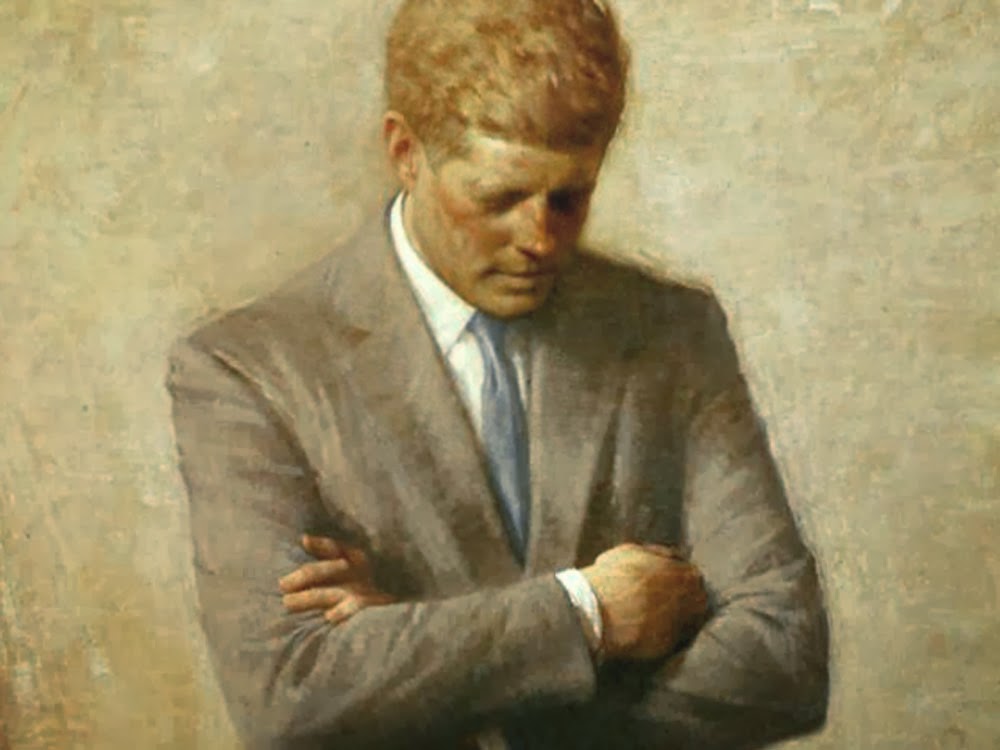
JFK - What a Leader Used To Be

I’ve watched and read quite a bit about the Kennedy Assassination this week, which happened 50 years ago today.  I have learned quite a bit, and recommend a couple of programs.  PBS’s American Experience series is usually very good, and the JFK edition just broadcast is no exception.  I also enjoyed PBS’s Frontline, where, much to my amazement, they appeared to scientifically prove that the “magic bullet” was not so magic after all, and that bullet was indeed fired by Oswald and it definitely passed through the President, into Governor Connally, just as the Warren Commission said it did.  Oliver Stone was not available for comment.

I also took some time to read some of Kennedy’s speeches, including his famous inaugural where he challenged us to “ask not what your country can do for you, ask what you can do for your country.”  I quoted the entire speech below, but I warn you, it will get you thinking.  I find it quite alarming when I compare the ideology behind it to what is so often expressed today by our leaders and educators and even churches.

Liberals and Conservatives today try to claim Kennedy as their own, but this is laughable in light of the lack of principle and depth that has enslaved our modern discourse and has left us directionless, rudderless, tossed to and fro by the enemies of freedom, both from afar and also from within.  JFK doesn't fit either ideology today.  But the desire of each side to say he would be one of them is an indicator of a great problem.  Whatever we think, we know we are not what we should be.  We are a nation that needs a leader, but we have forgotten how to find one.  We are a nation that needs to compete in a new world, but we lack the education and edification to do so.  We are a nation that needs spiritual repentance, but we don't know what direction to be penitent toward.  This was not so much the case in Kennedy's time, although many of the seeds of our current crop had already been sown and taken root.

This is not to say that JFK was a great President or a poor one, truly we will never really know.  But regardless, a real leader he was; not because of his office and not because of crafted words in a speech, but because he had the personal courage to lead a nation, rather than the tragic cowardliness that both parties lord over us in this hour.

I pray that we as a people return to the values of truth and sacrifice and responsibility, and leave behind forever our current admiration of mere intentions and articulate deception.  Let us stop asking what our country can do for us.  Let us stop fretting over the opinions of foreign tyrants.  Let us stop finding fault in others.  Instead, let us ask again what we can do for our country.  Let us truly help the poor serve the people of the world.  Let us remove the plank from our own eyes so that we can regain the moral standing necessary to lead.

For those who think freedom is fixed, for those who think tyranny is not crouching at our door, for those who think someone else is their brother's keeper; they are ignorant of history.  History is not forgiving of such attitudes and we will not escape the all too foreseeable calamities that mankind has brought upon itself time and time again.  We must reject such attitudes and set a new course before the long train of abuses in our bureaucracies and institutions is too difficult to overcome and freedom is lost forever.

Another President was celebrated this week.  He reminded us 150 years ago that we should not despair, but that this nation, under God, can have a new birth of freedom.  This is still true because to date, government of the people, by the people and for the people has not yet perished from the earth.  I pray that We The People will inform and educate ourselves, and not simply repeat the propaganda that misinforms our culture in every way, and has divided our common house.

John F. Kennedy's Inaugural Address, January 20, 1961

We observe today not a victory of party, but a celebration of freedom — symbolizing an end, as well as a beginning — signifying renewal, as well as change. For I have sworn before you and Almighty God the same solemn oath our forebears prescribed nearly a century and three quarters ago.

The world is very different now. For man holds in his mortal hands the power to abolish all forms of human poverty and all forms of human life. And yet the same revolutionary beliefs for which our forebears fought are still at issue around the globe — the belief that the rights of man come not from the generosity of the state, but from the hand of God.

We dare not forget today that we are the heirs of that first revolution. Let the word go forth from this time and place, to friend and foe alike, that the torch has been passed to a new generation of Americans — born in this century, tempered by war, disciplined by a hard and bitter peace, proud of our ancient heritage — and unwilling to witness or permit the slow undoing of those human rights to which this Nation has always been committed, and to which we are committed today at home and around the world.

Let every nation know, whether it wishes us well or ill, that we shall pay any price, bear any burden, meet any hardship, support any friend, oppose any foe, in order to assure the survival and the success of liberty.

This much we pledge — and more.

To those old allies whose cultural and spiritual origins we share, we pledge the loyalty of faithful friends. United, there is little we cannot do in a host of cooperative ventures. Divided, there is little we can do — for we dare not meet a powerful challenge at odds and split asunder.

To those new States whom we welcome to the ranks of the free, we pledge our word that one form of colonial control shall not have passed away merely to be replaced by a far more iron tyranny. We shall not always expect to find them supporting our view. But we shall always hope to find them strongly supporting their own freedom — and to remember that, in the past, those who foolishly sought power by riding the back of the tiger ended up inside.

To those peoples in the huts and villages across the globe struggling to break the bonds of mass misery, we pledge our best efforts to help them help themselves, for whatever period is required — not because the Communists may be doing it, not because we seek their votes, but because it is right. If a free society cannot help the many who are poor, it cannot save the few who are rich.

To our sister republics south of our border, we offer a special pledge — to convert our good words into good deeds — in a new alliance for progress — to assist free men and free governments in casting off the chains of poverty. But this peaceful revolution of hope cannot become the prey of hostile powers. Let all our neighbours know that we shall join with them to oppose aggression or subversion anywhere in the Americas. And let every other power know that this Hemisphere intends to remain the master of its own house.

To that world assembly of sovereign states, the United Nations, our last best hope in an age where the instruments of war have far outpaced the instruments of peace, we renew our pledge of support — to prevent it from becoming merely a forum for invective — to strengthen its shield of the new and the weak — and to enlarge the area in which its writ may run.

Finally, to those nations who would make themselves our adversary, we offer not a pledge but a request: that both sides begin anew the quest for peace, before the dark powers of destruction unleashed by science engulf all humanity in planned or accidental self-destruction.
We dare not tempt them with weakness. For only when our arms are sufficient beyond doubt can we be certain beyond doubt that they will never be employed.

But neither can two great and powerful groups of nations take comfort from our present course — both sides overburdened by the cost of modern weapons, both rightly alarmed by the steady spread of the deadly atom, yet both racing to alter that uncertain balance of terror that stays the hand of mankind's final war.

So let us begin anew — remembering on both sides that civility is not a sign of weakness, and sincerity is always subject to proof. Let us never negotiate out of fear. But let us never fear to negotiate.

Let both sides explore what problems unite us instead of belabouring those problems which divide us.
Let both sides, for the first time, formulate serious and precise proposals for the inspection and control of arms — and bring the absolute power to destroy other nations under the absolute control of all nations.

Let both sides seek to invoke the wonders of science instead of its terrors. Together let us explore the stars, conquer the deserts, eradicate disease, tap the ocean depths, and encourage the arts and commerce.

Let both sides unite to heed in all corners of the earth the command of Isaiah — to "undo the heavy burdens -. and to let the oppressed go free."

And if a beachhead of cooperation may push back the jungle of suspicion, let both sides join in creating a new endeavour, not a new balance of power, but a new world of law, where the strong are just and the weak secure and the peace preserved.

All this will not be finished in the first 100 days. Nor will it be finished in the first 1,000 days, nor in the life of this Administration, nor even perhaps in our lifetime on this planet. But let us begin.
In your hands, my fellow citizens, more than in mine, will rest the final success or failure of our course. Since this country was founded, each generation of Americans has been summoned to give testimony to its national loyalty. The graves of young Americans who answered the call to service surround the globe.

Now the trumpet summons us again — not as a call to bear arms, though arms we need; not as a call to battle, though embattled we are — but a call to bear the burden of a long twilight struggle, year in and year out, "rejoicing in hope, patient in tribulation" — a struggle against the common enemies of man: tyranny, poverty, disease, and war itself.

Can we forge against these enemies a grand and global alliance, North and South, East and West, that can assure a more fruitful life for all mankind? Will you join in that historic effort?

In the long history of the world, only a few generations have been granted the role of defending freedom in its hour of maximum danger. I do not shank from this responsibility — I welcome it. I do not believe that any of us would exchange places with any other people or any other generation. The energy, the faith, the devotion which we bring to this endeavour will light our country and all who serve it — and the glow from that fire can truly light the world.

And so, my fellow Americans: ask not what your country can do for you — ask what you can do for your country.

My fellow citizens of the world: ask not what America will do for you, but what together we can do for the freedom of man.

Finally, whether you are citizens of America or citizens of the world, ask of us the same high standards of strength and sacrifice which we ask of you. With a good conscience our only sure reward, with history the final judge of our deeds, let us go forth to lead the land we love, asking His blessing and His help, but knowing that here on earth God's work must truly be our own.


PSF

Jan 17, 2011

Martin Luther King Jr. Memorial Post

Many don't know that this year, the Martin Luther King Jr. Memorial will be dedicated in Washington D.C.  

Fewer people are aware that I wrote a blog about MLK Jr. about leadership a couple of years ago that gets a rather large bit of Internet traffic according to Google.  

So, since today is the MLK Jr. birthday holiday, I thought I'd link you to that two year old post instead of writing a new one.   Not only will it keep that article alive, but it also gives the appearance that I am posting something new today!  It's a two-fer!

http://scottfurrow.blogspot.com/2008/01/martin-luther-king-day.html

Have a great MLK holiday!

SCF

Mar 18, 2009

Blogging Angst

Angst - |a ng (k)st; รค ng (k)st| noun
a feeling of deep anxiety or dread, typically an unfocused one about the human condition or the state of the world in general. (from whatever dictionary is loaded onto my MacBook)

I have angst. I've had it for nearly a year. Its not the worried or stressful or hand-wringing kind of angst. Its not causing me to lose sleep and its not creating distraction in a detrimental way. Its not the kind that results in not trusting God. But there is a constant angst in me caused by discernment which seems to be suggesting some very big things are afoot.

I appreciate this definition above because my angst is "unfocused." I can't exactly put my finger on it, but it is related to the human condition and the state of the world in general. That's a big subject. And there are very big things going on. I believe a lot of people have this same angst right now.

I think this angst is somehow related to the fact that while I believe most people have this angst to some degree, and most people also believe that most people share this angst, it doesn't seem like anyone knows how to effectively discuss and respond to this angst over these big things going on, and the people who should be talking about these big things going on don't seem to have a clue that big things are going on. Someone needs to address this angst in a productive way. It seems to just linger, like a storm visible off shore threatening to create destruction, yet promising to relieve drought; but the weather channel won't acknowledge its presence.

Are you following me? If so, it can only be because you have this angst too. I think this angst is emotional and spiritual. There are big things going on.

Why am I telling you this, my faithful yet dwindling blog audience?

I think this angst of mine is the biggest block to my blogging. Because it is unfocused, it is difficult to even know where to start working it out. Every day, I have something I feel like I could blog about, but its difficult to get started because of focus - where do I start? It gets overwhelming and time consuming. My blogs could easily be thousands of words on a subject, whatever it is, and I don't have time to type all of that. This makes it especially hard to blog on serious subjects where I want to be thorough. If you know me, you understand that I can be a bit wordy (I recently preached a sermon that clocked in at an hour and six minutes. Take that Rob Bell!)

Another block is that some of my readers are people from my church where I pastor, which means some readers will take very seriously things I have to say about serious matters. So I need to becareful to post disclaimers, indicating whether my thoughts are strong conviction or mere speculation or commentary, especially when dealing with unspoken angst that many people are feeling but not expressing. Have no fear, remaining faithful readers, I'll still post some fun and an eventual exhaustive explanation about why Lost is the best show on TV.

I have some angst that Lost is not going to end well next year, but that's another issue.

Why am I inspired to blog now all of a sudden?

Well, another blogger, another pastor, found a way to express some of the angst he is feeling about changes coming to the church world. This is only a part of the angst I feel, but its relevant to it and a good place to start. Even if you aren't familiar with church terms or how church works, the issues discussed impact our culture significantly, whether you go to church or now. This relatively unknown blogger posted an article was picked up my major news magazines and websites and has caused a lot of buzz, especially in church circles. So I thought I would use his articles, entitled The Coming Evangelical Collapse to spur some writing of my own. We'll see if this works...

Disclaimer: These articles will cause you to think about your angst. Also, I don't necessarily agree with all of what is written, and my perspective is more optimistic - the changes he suggests are coming will lead to very good things in my view. But change is a comin', and I don't mean the political slogan tomfoolery we think of currently.

You can read all three parts at the link below. Feel free to comment on my blog if you wish to express your angst. I'll use this to inspire some blogs in the coming days.

If I can keep it short...

http://www.internetmonk.com/archive/the-original-coming-evangelical-collapse-posts

SCF

PS: "Tomfoolery" was not in my MacBook dictionary. A moment of angst about whether I should have stayed with a PC soon followed, but was quickly resolved.

Nov 17, 2008

Truth - Independent from Ideas

I have much to write about concerning issues observed during our recent election. Mostly, I an troubled with how unconcerned we are about what is actually true, and how reality governs what actually happens. I recently made this statement in an email conversation with a similarly concerned person in my church:
"With the decline of investigative journalism, the politics of scientific funding, and the corruption in the education system, “truth” is left to be revealed only by consequence rather than wisdom and aforethought. Sadly, the Church has not risen above the culture in these matters, and the truth remains hidden until it wreaks havoc with people and the nation."
I'll write more on this, particularly on the role of the Church in society at a later date (read: as soon as I have time to get my thoughts together on this.) Below is a video someone sent me that illustrates this point to some degree. Looks like Peter Schiff took a lot of heat for being right.


Truth - "conformity with fact, or reality."

Reality - "something that exists independently of ideas concerning it."


SCF

Sep 15, 2008

The Chinese Oikos and the Garage Door

Yesterday, I had the opportunity to speak at the Chinese Bible Church here in San Diego. I took French in high school and college, which, once again, was not valuable. But who takes Chinese anyway? Fortunately, I had an interpreter.

Whenever I am asked to speak somewhere, whether it be a church or other kind of community organization, it tends to be on one of just a couple of topics. Most often, I introduce audiences to the idea of their "oikos." I plan on writing more extensively about oikos in the next week or two. Most people reading this probably have some idea of the concept and how it works. But, in short, it goes like this:

Oikos is the Greek word meaning "household." In terms of ancient Greek society and in modern sociology, this "household" is not simply your spouse and 2.5 kids that live with you in your domicile. It refers to the people who surround you in your relational world, your circle of influence. One sociologist says your oikos is the group of people you spend an hour or more with or around every day. So for most people, their oikos consists of the people who do live in thier domicile, and also their family or roommates or strangers who move in to your house when you are away for Christmas (subject of another experience I should blog about.) It also consists of coworkers you were most closely with, classmates you see every day, the people who live next door to you. The average person has between 8-15 people in their oikos. For me, about 8 of them are Starbuck's baristas.

Oikos is vital to any society's survival. When people pay attention to their oikos, and work to meet each others needs, society works very well. When people ignore the needs of the people around them, society begins to crumble. Its all about the oikos.

So, to any audience, the concept is received well. Its basically a practical and tangible way to love your neighbor. I have now taught the concept in 3 languages and to people of all ages and backgrounds. It is a great equalizer. You don't get to choose your oikos (maybe your spouse, but that's it.) Therefore, everyone has an oikos and everyone is in someone else's oikos. Its unavoidable.

One person from the Chinese congregation shared with me afterward that he thought the oikos idea would work well in the Chinese community here. He said they basically practice this as a culture anyway and that to actually list our your 8-15 people will just make it even more practical. He was very appreciative.

But then he said something interesting. He asked me how the oikos philosophy is working in my church, since "westerners don't tend to do this very well." It is indeed harder for westerners in many respects because we love our walls.

How many of us really know the people who live next door or across the street or in the neighboring apartment? You may remember that in the terrorist manuals that were found after 9/11, the terrorists were advised to not be too concerned about their American neighbors since typically the neighbors aren't paying any attention and will hardly take the time to get to know you. They should expect to make their plans and build their bombs without much interference from the neighbors. It was a sad commentary.

I read one study that blamed automatic garage door openers for this phenomenon in American culture. It suggested that many years ago, people got to know their neighbors because they were often outside watering the grass with a hose and sitting on the porch to cool off becuase there was no air conditioning in the house. And when people got home from work, they had to get out of their car, and actually go open the garage door by hand. All of that out door time presented opportunity to say hello to neighbors, strike up conversations, invite them over for a bar-b-que etc.

Today, for most Americans, we get to our house, while staying in the car, we click the clicker, drive in the garage, then click the clicker again and get out of the car in our private garage with the door down and go into the house. Our built in sprinklers water the grass automatically, and the air is cleaner and more comfortable in our house. Safe. Away from pesky neighbors that we are suspicious of because they never talk to us.

Kristy and I have been making an effort to actually get to know our neighbors. They are in our oikos and we are committed to getting to know those people. Interestingly, the two families we are actually getting to know are the only two families who spend time outside their home.

Across the street, they water their yard with a hose and they sit in lawn chairs to get out of their hot house since they don't have A/C. The other family has a game room and bar in their garage and are often out there. For the most part, we have been unable to get to know our other neighbors simply because we never ever see them. We are planning to invite them over for dinner. They may call the cops on us, but we'll see.

More on oikos later. But its an interesting experience that has me thinking much more today about how important it is that we are concerned about our own oikos. As a Christ Follower, I think its not an option.

I encourage you this way - do you know who your oikos is?

SCF

Sep 11, 2008

Random Thoughts On September 11

Some random thoughts about 9/11, seven years later:

I pay as much attention as I can to the memorials and events commemorating 9/11. Starting at 6:00 am this morning, I watched a rebroadcast of the news events as they happened. It's riveting. I remember exactly what I was doing around my house during each of the events on the timeline. Being on the west coast, it began from the moment I woke up. I clicked on the TV just after the 2nd plane hit the towers. "Something very bad is happening" I said to Kristy. "We're going to have a big war."

Some people today don't think we should show the more graphic events of that day. I know people have very different sensitivities to these things and I respect that. I for one think we should show it more often. Judging by the number of Britney Spears references in our current presidential campaign, I think we need as much reality as possible.

A young man in my ministry in September 2001 made an appointment with me to discuss his distress over the realization that evil actually does exist. Why is this even a question? Reason #2 to show the footage more often.

I spent time contemplating the notion of today being a "solemn day." Solemn. A strange word. Why is the "n" there? Maybe its because I watched all that this morning, but solemn it is indeed. I was emotional a few times today as I prayed for our country.

I spent the rest of this morning comforting a deal lady who is dying of cancer. We are making funeral plans and getting her affairs in order. All of us have such affairs. 9-11 did not increase death. One out of every one person dies.

It is shocking to me that we don't have terrorist attacks in our country on a regular basis. I think there are hundreds of heros we will never know or acknowledge.

I want to visit the new memorial at the Pentagon.

I think if I were a family member of someone lost at the World Trade Center, I would be frustrated that there is still no memorial.

The best part about this day is that I think we all go back and care more for each other. People seem to drive better, smile more. Perhaps I'm just more sensitive to it, but it seems like a day where people are more at peace with each other. History has shown that society works better when people take care of people. Everyone has an "oikos," a "household" that consists of the people in your sphere of influence, relational world. 9/11 made each person pay more attention to their oikos, even if for just a few days.

Today is a good day for a renewed perspective on citizenship and the world we live in.

SCF

Jan 21, 2008

Martin Luther King and Leadership

One of my goals is to visit all of the Presidential Libraries. I may write more about them at a later time. When I visit, I also try to take in any significant historical sites that may be nearby.

In Atlanta, Georgia, nearby the Jimmy Carter Library, only a couple of miles away as the crow flies, is the Martin Luther King Jr. Center and Memorial Site. On my last trip to Atlanta, I led a leadership lesson comparing the leadership of Dr. King and President Carter. The purpose of the lesson was not to be critical of either, but to simply challenge growing leaders to consider what leadership qualities lead to accomplishment and positive change.

For the purposes of this lesson, we just considered the effectiveness of Carter's leadership as President as it compared to the leadership of Martin Luther King (MLK) as civil rights leader. It is important to point out that today, the Carter Center is one of the most effective organizations solving problems of poverty and disease in countries around the world. Carter's leadership as a former President, with respect to poverty, is an example to all former Presidents. Sadly, his contemporary political interjections continue to harm and overshadow the magnificent work of the Carter Center.

As for Carter, it is often said that his Presidency was the "unfinished presidency," which is a nice way of saying that he wasn't successful in what he set out to do as President. The Carter Library demonstrates this with exhibits of good ideas, many of which have still not been accomplished, i.e. a realistic energy policy and a containment of Islamic terrorism. You leave the presidential wing sensing this lack of accomplishment. Fortunately, a new exhibit demonstrating the work of the Carter Center with poverty and waterborne disease is uplifting and inspirational.

But there is not, and will never be, a Jimmy Carter Holiday. Today is Martin Luther King's birthday, so I thought I would post a bit on his leadership.

Coretta Scott King who died in 2006, is now laid next to Dr. King at the King Center

When visiting the King Center, it is interesting to note that the events most known in his life occurred 100 years after the Civil War. Last fall, I included some Atlanta Civil War sites in my tour.
Atlanta was burned to the ground by General Sherman during the War and there are markers all around relating to that battle. Not far from the King Center is the Oakland Cemetery, which contains one of the largest Confederate Soldier burial grounds, pictured here.

I sat for a while, pondering the loss of life in that war. Among many thoughts going through my head was - was it worth it? Meaning, was it really worth laying down your life to basically protect an economic system that relied so heavily on slavery? Its a bit disturbing that even today there are some who feel like it was. I considered the great destruction and pain and suffering and it seemed like such a waste. The love of money is the root of this evil, the root of many evils that lead to the Civil War.

One hundred years later, many of those evils still presided over the law, leading to the Civil Rights Movement and the necessary leadership of Dr. Martin Luther King Jr. Lessons are often learned terribly slow.

It is an interesting comparison, Jimmy Carter, a US President, and MLK, a citizen leader. Who was the more capable leader? One had the office of the Presidency, a world stage and unlimited funds (while he was the POTUS.) The other, a baptist preacher with no legal office and no money.

A pictorial wall of the major events of MLK's life.

A trip through both museums reveals much about each leader. MLK was a leader of great accomplishment, whose legacy is still inspiring others to learn and to allow and make progress. Bus after bus pulled up to the museum, unloading passengers from different backgrounds and ethnicities. The King Museum is not fancy and relatively small; a bit run down I thought. But in just a couple of small rooms, his story and legacy are well told.

This is the key to the hotel room MLK was staying in when he was assassinated.

MLK's personal Bible


MLK's church, Ebeneezer Baptist Church stands next to his memorial.

One leaves the MLK Center quiet, in deep thought and retrospection... and inspired about what can be accomplished with sacrifice and a wise approach to leadership.

Leadership can be defined as "influence, nothing more nothing less." MLK had incredible influence. He was a great leader because he influenced change in a positive and long lasting way. Unlike many of his contemporaries, he refused to run for political office and he led his followers in non-violent approach which forced the country to take notice.

Great leaders are often considered great because they hold to a basic principle to accomplish their goals. I believe that if MLK had not approached these issues with a non-violent philosophy, or had he been elected to some public office, he would not be celebrated today with a holiday or a monument or a museum. He would likely be buried in Oakland Cemetery with a fancy tombstone and be just another spot on the tour map.

And no-one would have today off.

While there is much more progress to be made in the area of civil rights and social justice, MLK's accomplishments do not stand as unfinished or unsuccessful. His life completed with a solid legacy and clear purpose.

My favorite MLK speech is the "I've Been to the Mountaintop" speech. While the content is important, this speech moves me because of its context in MLK's life. The speech would be the final speech ever given by King. With a careful read and a historical perspective, I can't help but wonder if he somehow sensed that his life or influence would soon come to an end. It is the perfect final address. The speech itself summarizes his accomplishments and gives a time-line of the movement up to that point. He also gives warnings and guidance for those who would continue on, and he gives reminders of the importance of the non-violent approach. He ends the speech with these words:

"Well, I don't know what will happen now. We've got some difficult days ahead. But it really doesn't matter with me now, because I've been to the mountaintop. And I don't mind. Like anybody, I would like to live a long life. Longevity has its place. But I'm not concerned about that now. I just want to do God's will. And He's allowed me to go up to the mountain. And I've looked over. And I've seen the Promised Land. I may not get there with you. But I want you to know tonight, that we, as a people, will get to the promised land! And so I'm happy, tonight. I'm not worried about anything. I'm not fearing any man! Mine eyes have seen the glory of the coming of the Lord!!" - Martin Luther King, Jr.

He said those words on April 3, 1968 in Memphis. He was assassinated the very next day, April 4, 1968. These are the words of a great leader who finished well.

You can read or listen to this speech here: http://www.americanrhetoric.com/speeches/mlkivebeentothemountaintop.htm

SCF

Jan 2, 2008

Some Business in Ghana

Death - not what I figured I would post about on just the second day.

In the US, most people don’t spend a whole lot of time contemplating our common fate, unless we have good reason to believe it is coming soon or unless we have an Adjustable Rate Mortgage. Other than life insurance, most people don’t really plan for it.

One business that will always be in business is the death business. One out of every one person dies. Wars and disease do not increase death, they only affect the time and circumstance of it. Everyone is a customer. You can even buy your coffin at Costco; however, you may have to buy the 2-pack.

A friend of mine is a missionary in Ghana. In every economy, some businesses thrive more than others. In Ghana, the funeral and casket making business is quite visible sadly, as the circumstances in this impoverished nation keep death and dying in the greater conscious of the typical person. He has recently been posting some local advertising for caskets. These photos struck me as a profound statement about our blessings and the opportunities we have to bless others.

Coffins as common as coffee tables.


"Time Will Tell" - a salesman with a sense of humor.


Wherever you go, some American has a business going.


If you can't read it, the ad on the right is for an undertaker, just in case you might need one while you are visiting this town.


For some with a little extra money, fancy caskets are all the rage.


Ghana is one of those poor countries that has one of the best chances to grow economically. It has relatively little violence compared to many of its neighbors, abundant natural resources, great people and a great location (coastal Africa) for business and trade. They even speak English. But the poverty level, especially in rural areas, is overwhelming. And people don't live very long.

Government corruption is one of the major problems, making it difficult for world governments to help and international aid is often squandered.

Who can help? I believe that ultimately, only the Church is free to help, without hindrance of bureaucracy or corrupt governments. People like my friend Stacey, who go and demonstrate and announce the message of Christ.

Praying for Ghana today.

SCF